Sloe Gin Making Explained: Harvest, Infuse, Sweeten, and Bottle Your Liqueur
Introduction
Sloe gin is a classic British liqueur that’s fruity, sweet, and perfect for cozy evenings. While it has “gin” in the name, it’s actually more of a liqueur because the alcohol level drops after the fruit infusion. The good news is that making sloe gin at home is simple, fun, and very rewarding. Let’s break it down step by step.
What Is Sloe Gin?
Sloe gin is made by soaking sloe berries, the small, tart fruits from the blackthorn bush, in gin. Over time, the berries release their color, flavor, and sweetness, turning the gin a deep crimson and giving it a syrupy smoothness. The alcohol content usually ends up around 15–30%, depending on the gin used and how long you let it infuse.
Historically, sloe gin goes back centuries. One of the earliest mentions comes from a 1717 London pamphlet, which talks about “sugar, sloes, and grocer’s trash” as homemade gin ingredients. By the 18th century, during the Gin Craze, poor-quality gin was often mixed with sloes and sugar to make it drinkable. That’s how sloe gin earned the nickname “the poor man’s port.” Today, it’s a seasonal treat, appreciated for its fruity, warming flavor.
Ingredients and Equipment You’ll Need
Making sloe gin at home requires only a few ingredients and tools:
Ingredients
- Sloe berries: 450-500 g per liter of gin
- Sugar: 225-250 g per liter of gin
- Gin: At least 40% ABV, preferably a juniper-forward London Dry style
Optional flavor boosters:
- Citrus peel (orange or lemon)
- Vanilla pod or beans
- Warm spices like cinnamon, cloves, or star anise
- Blanched almonds for a marzipan hint
Equipment
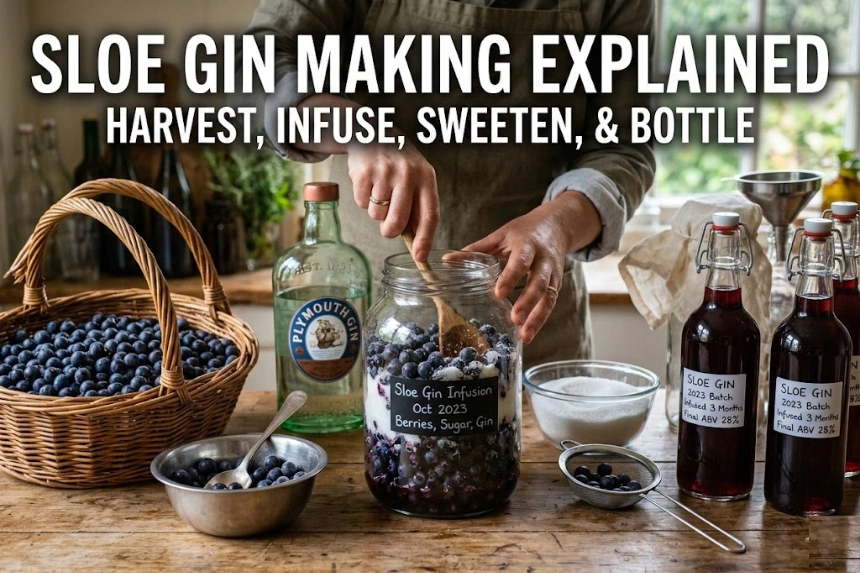
To make sloe gin, you’ll need wide-mouth sterilized glass jars with tight lids, a funnel, a muslin cloth or fine sieve for straining, and sterilized bottles to store the finished gin. It’s important to sterilize all jars and bottle, wash them in hot water or run them through a hot oven cycle, to prevent off-flavors or spoilage.
Step-by-Step Guide to Making Sloe Gin
1. Pick and Prepare the Sloes
Harvest sloes in autumn when they’re plump and deep purple. Ideally, pick them after the first frost. Frost naturally splits the skins, which helps the gin extract flavor more easily. If frost hasn’t arrived, freeze the berries for 24, 48 hours, this bursts the skins and saves you hours of pricking each berry by hand. Rinse the sloes and discard any shriveled or unripe fruit. A ripe sloe should squish easily between your fingers.
2. Sterilize Jars and Add the Sloes
Once prepped, fill a sterilized jar about halfway with sloes. For a one-liter batch, this is roughly 450, 500 g of berries. Optional extras like citrus peel or vanilla can be added at this stage for extra flavor.
3. Add Gin (and Sugar)
Pour gin over the berries until they’re fully submerged. You can add some sugar now or wait until the end, many brewers prefer adding a little first, then sweetening to taste after maceration. Seal the jar tightly.
4. Infuse and Shake
Store the jar in a cool, dark place. Shake daily for the first week, then once a week after that. This helps the gin extract color and flavor from the berries. Over 2-3 months, the liquid will turn a deep ruby red. Some people leave their gin to mature for 6-12 months for a smoother, more integrated taste. Patience really pays off.
5. Add Sweetener (If Needed)
Once the gin has infused and is richly colored, taste it. If you want it sweeter, dissolve sugar in a little warm water to make a syrup and gradually stir it into the gin until you reach your preferred sweetness. Honey is a great alternative for a complex flavor.
6. Decant and Bottle
Line a sieve with muslin or use a fine strainer to separate the gin from the berries. You can save the fruit for other uses-dipped in chocolate or cooked into compotes, they’re delicious! Funnel the strained gin into sterilized bottles and seal. Label them with the date and sugar level. Your gin is now drinkable, but flavor continues to improve with time.
Tips for Selecting Sloes and Gin
Pick ripe berries: They should be plump and deep purple. Unripe berries are hard, sour, and yield little juice.
Frost or freeze: Natural frost is ideal, but freezing works just as well to break the skins.
Don’t skimp on gin: Use at least 40% ABV gin. Sloes absorb a lot of alcohol, so a higher-proof spirit ensures your liqueur is strong enough.
Sterilize everything: High alcohol helps prevent spoilage, but clean jars prevent off-flavors.
Common Mistakes to Avoid
- Using green or hard soles, they taste astringent and give little flavor.
- Skipping the skin preparation step (frosting, freezing, or pricking).
- Using low-proof gin, your final drink may end up weak.
- Adding all the sugar at the start, which can make the gin too sweet.
- Bottling too early before the full infusion period; the flavor won’t be fully developed.
Flavoring and Enhancement Options
Classic sloe gin is just sloes, gin, and sugar, but you can experiment:
Citrus peel: Adds brightness and freshness.
Spices: Cinnamon, cloves, star anise, or nutmeg give warmth. Use lightly to avoid overpowering.
Nuts: Blanched almonds or almond essence enhance the marzipan-like flavor.
Other fruits: Dried cherries, blackberries, or elderberries can add subtle complexity.
Test these extras in small batches to avoid overpowering the natural sloe flavor.
Aging and Storage
Sloe gin keeps exceptionally well in sealed bottles stored in a cool, dark place. Flavor continues to improve over time, becoming smoother and richer. Most home brewers suggest waiting at least 2, 3 months before drinking. Many enjoy letting it mature for 6, 12 months or even longer. Properly stored, homemade sloe gin can last for years.
Once opened, you can store it at room temperature thanks to its alcohol and sugar content. Refrigeration is optional, especially if you’ll drink it slowly.
Serving Suggestions and Cocktails
Sloe gin is versatile and can be enjoyed in several ways:
Neat or over ice: Perfect for sipping on a chilly evening.
With sparkling wine: Try a “Sloe Royale” by adding a splash of sloe gin to Champagne or prosecco.
Cocktails:
Sloe Gin Fizz: Shake sloe gin with lemon juice, simple syrup, egg white, and soda.
Sloe Gin in a Gin & Tonic: Adds a rosy twist.
Sloegroni: Substitute sloe gin for red vermouth in a Negroni.
Simple mixes: Sloe gin with ginger ale, or drizzled over vanilla ice cream.
As Warner’s Distillery puts it, sloe gin is “perfect served neat over ice,” or “glug it down in a glass of bubbly for a little bit of festive magic.”
Final Thoughts
Making sloe gin at home is not only simple but also a fun way to celebrate the seasons. With just sloes, gin, and sugar, you can create a rich, fruity, and warming liqueur. Patience is key, the longer it ages, the better it tastes. Whether served straight, in cocktails, or as a gift, homemade sloe gin is a rewarding project for any home brewer. Cheers to a crimson-hued, fruity delight!