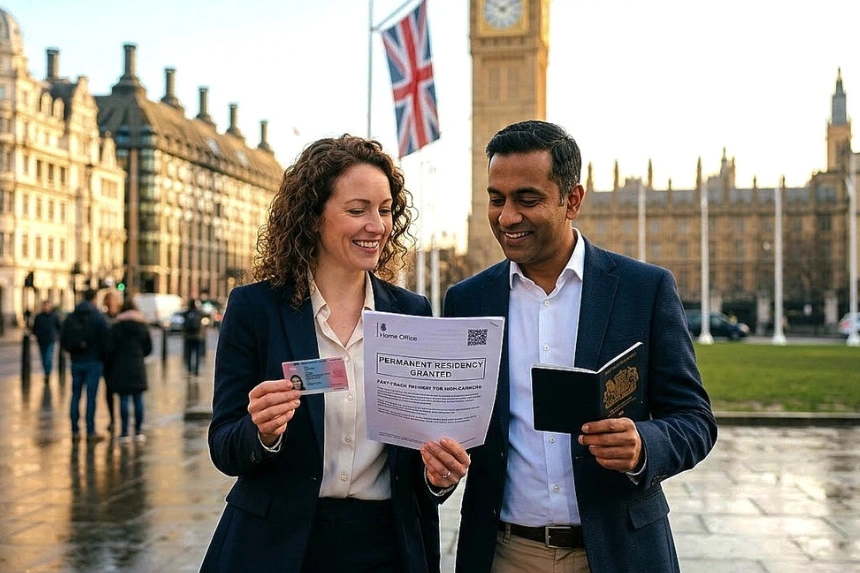
The UK is Fast-Tracking High-Earners to Permanent Residency
Introduction
The United Kingdom is changing how migrants qualify for permanent residency. In 2025, the government announced a new plan that rewards people who earn higher incomes in the UK. Under the proposal, some migrants will be able to gain permanent residency much faster than before.
This change focuses on what the government calls “earned settlement.” Instead of everyone waiting the same number of years, the time needed to settle in the UK will depend on how much a person contributes to the economy.
For high earners, this could mean getting permanent residency in just three years. However, many other migrants may have to wait longer than before. In this article, we’ll explain what the new rules mean, who is affected, and how migrants can prepare.
What Is Permanent Residency in the UK?
Permanent residency in the UK is known as Indefinite Leave to Remain (ILR). Once a person receives ILR, they can live and work in the UK without any time restrictions. This means they no longer need to renew their visa and gain greater freedom in their daily life.
For example, they can work for any employer, start their own business, study without visa limits, and access certain public benefits. ILR also opens the door to applying for British citizenship later. In the past, most work visa holders needed to live in the UK for about five years before becoming eligible for ILR, but the government is now planning to change that system.
Why the UK Is Changing Its Immigration Rules
In May 2025, the UK government published a policy plan called Restoring Control over the Immigration System White Paper 2025.
The goal was to reform immigration rules and make them more focused on economic contribution. The government wants migrants to “earn” their settlement by contributing to the economy through skills, work, and taxes.
Under this approach, higher earners may qualify for settlement faster, while others may need to stay longer before receiving permanent status.
The New Fast-Track System for High Earners
The biggest change is the introduction of a salary-based fast-track system.Here is how the proposed system works:
1. High Earners: 3-Year Route
Migrants who earn about £125,000 or more per year may qualify for ILR after just three years. This is the fastest route and is designed for professionals who pay the highest level of income tax in the UK.
High-earning professionals such as senior tech specialists, financial executives, entrepreneurs, highly paid consultants, and leading scientists may qualify for the fast-track route. If they maintain the required income level for three years, they could apply for permanent residency much earlier than before.
2. Middle Income Workers: 5-Year Route
Migrants earning between £50,000 and £125,000 per year may qualify for Indefinite Leave to Remain after five years. This is similar to the current settlement timeline and often includes skilled professionals such as engineers, managers, and analysts.
3. Lower Income Workers: 10-Year Route
Workers earning less than about £50,000 per year may need to wait 10 years before applying for permanent residency. This becomes the new baseline for settlement and may affect many migrants on work visas with lower salary levels.
Visa Types That Will Be Affected
The new rules are expected to apply to most people using the UK’s points-based immigration system.
1. Skilled Worker Visa
The Skilled Worker visa UK is the most common work visa in the country. Currently, people on this visa can apply for ILR after five years. Under the new system, the timeline will depend on income.
For example:
- High earners may qualify in 3 years
- Mid-level earners may qualify in 5 years
- Lower earners may wait up to 10 years
2. Scale-up Worker Visa
The Scale-up Worker visa UK allows migrants to work for fast-growing companies. Settlement rules for this visa will likely follow the same income-based structure as the Skilled Worker visa.
3. High Potential Individual Visa
The High Potential Individual visa UK is designed for graduates from top global universities.
This visa does not lead directly to permanent residency. However, if holders switch to a Skilled Worker visa, their settlement timeline will follow the new earnings-based system.
4. Global Talent Visa
The Global Talent visa UK already offers a fast route to settlement. People on this visa can still apply for ILR after three years, so this rule remains unchanged.
When Will These Changes Start?
The immigration reforms will happen step by step. Here are the important dates to remember:
- May 2025: The government announced the immigration reform plan.
- November 2025: People were invited to give their opinions on the plan.
- February 2026: The time for sharing opinions ended.
- Spring 2026: The new rules are expected to start.
If everything goes as planned, the changes could begin around April 2026.
If you are a migrant who is close to meeting the current rules, it might be a good idea to apply before the new system starts.
How the Application Process Will Work
Even though the waiting period may change, the application process for ILR will remain mostly the same.
1. Meet Residency Requirements
They must live in the UK for the required number of years based on their income level.
2. Pass the Life in the UK Test
This exam checks knowledge about British history, laws, and culture.
3. Prove English Language Skills
Applicants must meet English language requirements, which may increase to a higher level in 2027.
4. Show Good Character
Applicants cannot have serious criminal records, immigration violations, or unpaid debts to the government.
5. Provide Financial Evidence
High earners must prove their income by submitting documents such as payslips, tax records, P60 forms, and employer sponsorship records.
How Much Does the Application Cost?
Applying for ILR can be expensive.
The current application fee is around £3,300 per person. Families applying together will need to pay separate fees for each member.
Processing usually takes around six months, although faster priority services may be available.
How Other Countries Handle Fast-Track Residency
Many countries also offer fast-track residency for talented migrants, but they often use different methods.
1. United States
The U.S. offers special immigration pathways for highly accomplished individuals through programs like EB-1A Extraordinary Ability visa.
This category allows scientists, researchers, and other experts to apply for permanent residency based on exceptional achievements.
2. Canada
Canada uses a points-based immigration program called Canada Express Entry.
Applicants earn points for education, work experience, language skills, and job offers. The highest scoring candidates can receive permanent residency in a relatively short time.
Unlike the UK’s new model, Canada does not rely mainly on income thresholds.
Practical Tips for Migrants
If you are working in the UK and hope to gain permanent residency, it is important to plan ahead.
Here are some helpful steps:
First, check your salary history and understand which settlement path you fall into.
Second, keep careful records of your income, tax filings, and employment history.
Third, prepare early for the Life in the UK test and English language requirements.
Finally, if you are close to meeting the current five-year requirement, consider applying for ILR before new rules begin.
Immigration laws can change quickly, so staying informed is very important.
Conclusion
The new UK immigration proposal introduces a major shift in how migrants qualify for permanent residency. By linking settlement to income, the government aims to reward high economic contribution and attract top global talent.
For high earners, the opportunity to gain Indefinite Leave to Remain in just three years could make the UK a more attractive destination.
However, for many other workers, the path to settlement may become longer and more uncertain.
As the policy moves toward implementation, migrants, employers, and immigration experts will be watching closely to see how the system works in practice.
FAQs
High-earning migrants who consistently earn around £125,000 or more per year may qualify for the fastest settlement route and apply for permanent residency after three years.
No. Only migrants who meet specific income thresholds can qualify for the shorter routes. Others may still need to wait five or even ten years depending on their salary level.
The government has suggested that the changes could also apply to people who are already on work visas, although final details will depend on the official immigration rules when they are implemented.
In many cases, partners and children can apply at the same time as the main applicant if they meet the eligibility requirements and have lived in the UK for the required period.
If a person’s income falls below the required threshold during the qualifying years, they may lose eligibility for the faster route and move to a longer settlement timeline.
Yes. Even under the new fast-track system, applicants must pass the Life in the UK test and meet English language requirements before receiving permanent residency.
Processing times can vary, but most applications are usually decided within about six months after submission.