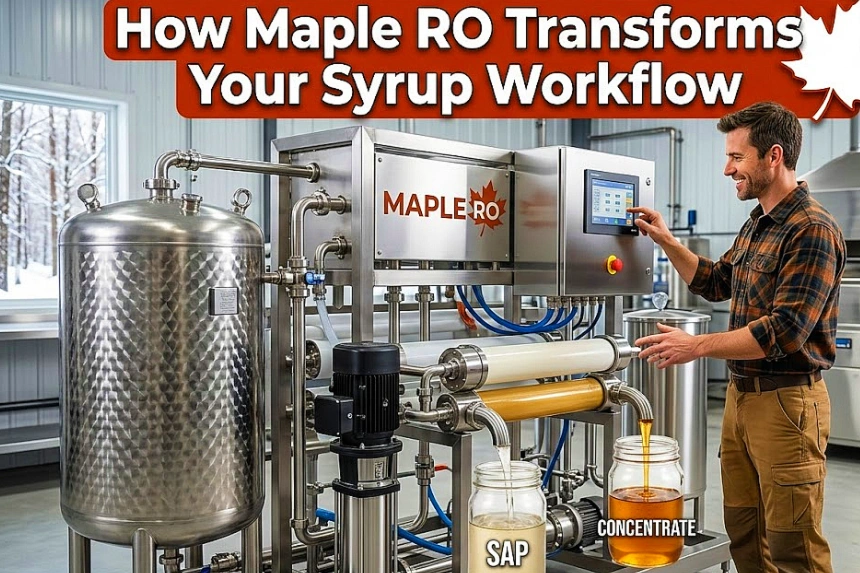
How Maple RO Transforms Your Syrup Workflow
Introduction to Maple RO
Maple syrup has been a beloved natural sweetener for centuries. Traditionally, making maple syrup involves collecting sap from maple trees and boiling it down until it turns into a thick, sweet syrup. But in recent years, producers have started using Maple RO, which stands for reverse osmosis in maple syrup production. This technology helps concentrate the sugars in the sap before boiling, making the syrup-making process faster, more energy-efficient, and environmentally friendly.
What is Maple RO?
Maple RO is a process where water is removed from a liquid using a semi-permeable membrane. Think of the membrane like a super-fine strainer: it lets water molecules pass through but blocks larger molecules like sugar.
In the case of maple syrup production, RO is used to remove water from raw maple sap, which is mostly water with a small amount of sugar. By removing some water first, the sap becomes more concentrated, which means less boiling is needed to make syrup.
How Maple RO Works in Syrup Production
Here’s a simple step-by-step explanation of how Maple RO is used in syrup production:
Collecting Sap: Maple sap is collected from trees during the sugaring season, just like in traditional methods.
Filtering Sap: The sap is first filtered to remove leaves, bark, and other debris.
Passing Sap Through the RO Machine: The filtered sap is pumped into the RO machine, where it passes through a semi-permeable membrane.
Concentrating Sugars: The RO process removes a large portion of water from the sap, often up to 75%. This results in concentrated sap with higher sugar content.
Boiling the Sap: The concentrated sap now requires much less boiling to turn into syrup. This saves time, fuel, and energy.
Types of Maple RO Systems
Not all Maple RO systems are the same. They come in different sizes.
1. Small Hobby Systems
Made for backyard producers
Small hobby Maple RO systems are built for backyard producers and small-scale syrup makers. They cost less than larger units and process sap at a slower speed, but they work well for operations with a few hundred taps or fewer.
2. Mid-Size Systems
For small to medium sugarhouses
Mid-size Maple RO systems are designed for small to medium sugarhouses. They offer faster flow rates and can concentrate sap to higher sugar levels, making them a strong choice for growing maple businesses.
3. Large Commercial Systems
Used by big maple operations
Large commercial Maple RO systems are built for big maple operations. They deliver very high output, often include advanced monitoring systems, and are expensive but powerful.
The right system depends on:
The best Maple RO system depends on your number of taps, your budget, and your long-term goals.
Benefits of Using Maple RO
Maple RO brings several advantages to syrup production, making it popular among modern maple producers:
1. Saves Time
Since RO removes most of the water before boiling, the sap takes far less time to boil down to syrup. Traditional boiling could take 40–50 hours, while RO can reduce this to just a few hours of boiling.
2. Energy Efficiency
Boiling less water means using less wood, oil, or gas. This reduces the environmental footprint and production costs.
3. Higher Yields
By concentrating the sap, producers can get more syrup from the same amount of raw sap. This is great for meeting high demand without cutting corners.
4. Consistent Quality
RO helps control the sugar concentration precisely, leading to more consistent flavor, color, and density in the finished syrup.
5. Eco-Friendly Production
Less energy use and less waste water make Maple RO a more sustainable way to produce maple syrup.
Typical Cost Ranges
| Type of Maple RO | Typical Price Range | Best For |
|---|---|---|
| Hobby / Small RO | $300 – $1,500 | Backyard / small sap production |
| Entry-Level RO | $1,200 – $4,500 | 100-500 taps |
| Mid-Range RO | $5,000 – $12,000 | 500-2000 taps |
| Commercial RO | $10,000 – $40,000 | Large sugarhouses |
| High-End Industrial | $40,000 – $80,000+ | Very large operations |
Does Maple RO Affect Taste?
Many people wonder if using RO changes the flavor of maple syrup. The answer is generally no. Maple RO only removes water, leaving the natural sugars and flavor compounds intact. Some traditionalists may prefer syrup made entirely by boiling, but most consumers can’t tell the difference.
Example of Maple RO in Action
Let’s look at a simple, real-world example to understand how Maple RO is used during syrup season.
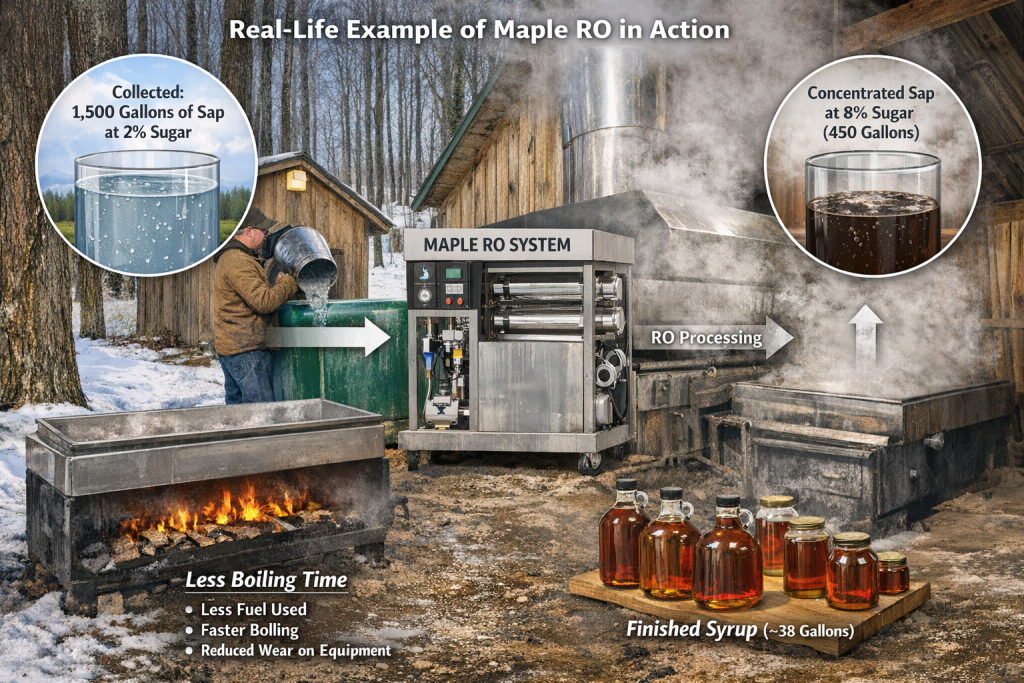
Example: A 1,000-Tap Maple Operation
Imagine a maple producer with 1,000 taps. During a good spring day, they collect about 1,500 gallons of sap. The sap tests at around 2% sugar, which is normal.
Without Maple RO, they would need about 40 gallons of sap to make 1 gallon of syrup. That means they would need to boil almost all 1,500 gallons to end up with roughly 37-38 gallons of syrup. This could take many long hours of boiling and a large amount of fuel.
Step 1: Running Sap Through the RO
The producer runs the 1,500 gallons of sap through their mid-size RO machine. The system removes a large portion of the water and concentrates the sap from 2% sugar to about 8% sugar.
After RO processing:
- The total liquid volume may drop from 1,500 gallons to around 400-500 gallons.
- The sugar is still there, just in less water.
Step 2: Boiling the Concentrated Sap
Now, instead of boiling 1,500 gallons, the producer only needs to boil about 450 gallons. This cuts boiling time by more than half.
Because of this, the producer burns far less wood or fuel oil during the season. They are able to finish boiling much earlier in the day instead of working long hours into the night. Since the evaporator runs for fewer hours, it experiences less heat stress and wear, which helps extend its lifespan and reduce maintenance needs.
Challenges of Maple RO
While Maple RO is highly beneficial, there are some challenges:
High Initial Cost: RO machines are expensive, which may be hard for very small producers to afford.
Maintenance Required: Membranes need regular cleaning and occasional replacement to keep the machine working efficiently.
Electricity Use: RO machines require electricity, which may be a limitation in remote sugarbushes without power.
Despite these challenges, the benefits often outweigh the drawbacks for many producers.
The Future of Maple RO
Maple RO is transforming the maple syrup industry. As technology improves, machines are becoming more affordable, efficient, and easier to use. With sustainability and energy efficiency becoming more important, RO is likely to become a standard part of syrup production in both small and large operations.
Conclusion
Maple RO is a modern innovation that combines science and tradition. By using reverse osmosis to concentrate maple sap before boiling, producers save time, reduce energy use, increase yield, and maintain high-quality syrup. While there are some costs and maintenance requirements, the technology is shaping a more sustainable and efficient future for maple syrup production.