Step-by-Step Guide to Undragoning Your Skittish Pet Lizard
You’ve probably seen them online – a bearded dragon sitting on someone’s shoulder, a blue-tongued skink eating a strawberry out of someone’s hand, or a tiny iguana snoozing on a warm rock. These little creatures look like something straight out of a fantasy movie. No wonder their owners call them “dragons.”
But here’s the thing: most of these animals don’t start out friendly. A new reptile can be skittish, defensive, and hard to handle. That’s where undragoning comes in.
To undragon a pet reptile means to take a creature that seems wild and dragon-like – all stiff posture, puffed beard, and side-eyes – and slowly turn it into a calm, comfortable, and well-loved companion. It’s a process. It takes patience. But for reptile lovers, it’s one of the most rewarding things you can do.
Why Reptiles Act Like “Dragons” at First
Before we talk about how to undragon your pet, it helps to understand why they act the way they do.
Reptiles are not like dogs or cats. They didn’t evolve to live with humans. In the wild, they survive by being alert, cautious, and ready to escape from predators. When you bring a new lizard home, it doesn’t know you’re safe. As far as it’s concerned, you’re a giant creature that could be a threat.
So it puts on its dragon face.
A bearded dragon might puff up its beard and turn it black. An iguana might whip its tail. A blue-tongued skink might hiss and stick out that bright blue tongue to scare you off. This isn’t bad behavior – it’s just fear. The animal is doing exactly what it was built to do.
Understanding this is the first step in undragoning. Your pet isn’t mean. It’s just scared. And scared creatures can learn to feel safe – if you give them the right environment, time, and care.
Setting Up the Perfect Home First
Before you even think about taming your reptile, you need to get its home right. A stressed lizard in a bad setup will never relax – no matter how patient you are.
Temperature and Lighting
Reptiles are cold-blooded, which means they can’t control their own body temperature. They rely completely on their environment. Every reptile enclosure needs:
- A basking spot – a warm area under a heat lamp where your pet can soak up warmth. Bearded dragons need this around 100–110°F.
- A cool side – so the animal can move away from the heat when needed.
- UVB lighting – this is essential for most lizards. Without proper UVB light, they can’t absorb calcium, which leads to serious health problems.
Get the temperature and lighting right, and your reptile will already be less stressed.
Space and Hiding Spots
A cramped enclosure makes any animal anxious. Make sure the tank or terrarium is big enough for your specific species. Also, add a few hiding spots, small caves, cork bark, or even a cardboard box with a hole cut in it.
This might sound counterintuitive. Why would you want your lizard to hide? Because having a place to hide makes them feel safe. When an animal knows it can retreat, it actually becomes braver about coming out and exploring.
Clean Water and Fresh Food
This one sounds obvious, but it matters more than people think. A well-fed, well-hydrated reptile is a calm reptile. Make sure you know exactly what your species eats, some are insectivores, some are herbivores, and some eat both. Feeding the wrong diet creates health problems, and a sick animal is much harder to tame.
The Real Work: Building Trust Step by Step
Once the habitat is set up properly, it’s time to start the actual undragoning process. Here’s how to do it the right way.
Step 1: Just Be Present
For the first few days, don’t try to handle your reptile at all. Just sit near the enclosure. Talk softly. Let your pet see you, hear you, and get used to your presence without feeling threatened.
Reptiles are very good at picking up on stress, yours and their own. If you approach with nervous energy, they’ll feel it. Calm, slow, and quiet is the way to go.
Step 2: Start with Your Scent
Before you try picking your lizard up, let it get used to your smell. Place your hand near the enclosure opening for a few minutes each day. Don’t reach in and grab — just let your hand be there. Some owners will leave a worn piece of clothing near the enclosure so the animal gets used to their scent over time.
This sounds small, but scent is huge for reptiles. Once they recognize your smell as “not a threat,” you’ve made a major step forward.
Step 3: Hand-Feed Whenever You Can
Nothing builds trust faster than food. Find out what your reptile’s favorite treat is and start offering it directly from your hand. For bearded dragons, that might be a juicy worm or a small piece of fruit. For blue-tongued skinks, it could be a bit of soft food.
At first, your pet might snatch the food and back away. That’s fine. Keep at it. Over time, it will stop retreating. Eventually, it will stay near your hand after eating, and that’s a huge sign that trust is building.
Step 4: Short Handling Sessions
When your reptile seems comfortable around your hand, you can try picking it up for the first time. Here’s how to do it right:
- Move slowly. Quick movements trigger the flight response.
- Approach from the side, not from above. Coming from above mimics how a predator would swoop down. It’s scary for the animal.
- Support the whole body. Reptiles feel insecure when their legs are dangling. Let them rest fully on your hand or arm.
- Keep the first sessions short. Two to five minutes is enough at the start. Gradually increase the time as your pet gets more comfortable.
If your reptile struggles or seems very stressed, put it back gently and try again another day. Never force it. Forcing a reptile to be held when it’s scared sets the process back significantly.
Step 5: Make Handling a Regular Routine
Consistency is everything with reptiles. Try to handle your pet at roughly the same time each day. Most reptiles do best in the late morning or early afternoon when they’re warm and active.
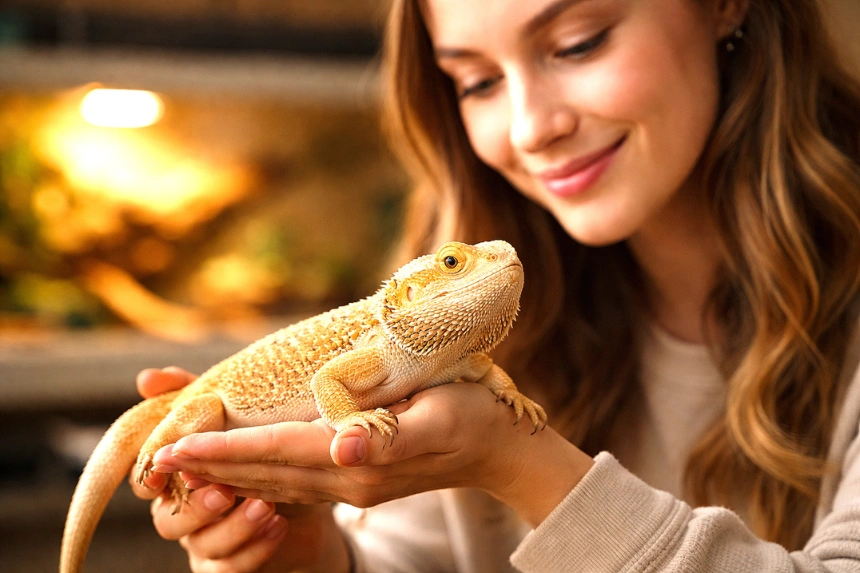
Over days and weeks, something remarkable starts to happen. The puffed beard relaxes. The hissing stops. The animal starts to climb onto your hand on its own. It might even fall asleep on you. That’s the moment you know, you’ve done it. You’ve undragoned your dragon
Common Mistakes That Slow the Process Down
Even well-meaning owners can accidentally make taming harder. Here are a few things to avoid:
Handling too soon. Give your reptile at least a week to settle into its new home before you start any handling. Jumping in too fast creates unnecessary stress.
Handling when the animal is cold. Reptiles are slower and more alert when they’re cold. Always make sure your pet has had time to bask and warm up before handling. A warm lizard is a relaxed lizard.
Loud environments. Reptiles are sensitive to sudden noises and vibrations. Avoid loud music, TV at high volume, or letting other pets crowd the enclosure.
Inconsistency. If you handle your pet daily for a week, then disappear for two weeks, you’ll lose some of the progress you made. Try to keep a regular routine.
The Reward of Undragoning
People who have never owned a reptile sometimes wonder why anyone would want one as a pet. They seem so still. So quiet. So different from the warm, fuzzy animals most people are used to.
But reptile owners know the truth. When a bearded dragon finally crawls up your arm and settles on your shoulder like it owns the place, that feeling is hard to describe. When a skink licks your hand and decides you’re okay, that’s real. It earned it. You earned it.
Undragoning isn’t just about taming an animal. It’s about building a relationship with a creature that had no reason to trust you, and doing the work until it does.
That takes patience, consistency, and genuine care. And in return, you get something pretty special: a little dragon that chose you.
Quick Recap: How to Undragon Your Reptile
- Set up the habitat correctly – right temperature, UVB lighting, hiding spots, and proper food.
- Give your new pet time to settle in before you start handling.
- Build trust slowly – be present, use your scent, and hand-feed treats.
- Handle gently and briefly at first, always supporting the full body.
- Be consistent and patient. Trust grows over time, not overnight.
If you follow these steps, the wild little dragon in your care will slowly reveal the calm, curious, and surprisingly sweet animal it truly is.