Navigating Aytoun Street: Transport and Accessibility in Manchester’s Core
Introduction
Cities often have streets that quietly play an important role in daily life. They may not always be the largest or most famous roads, but they connect people, businesses, and landmarks in meaningful ways. One such street is Aytoun Street, located in the vibrant center of Manchester.
Aytoun St is a relatively short street, yet it serves as an essential connector within Manchester’s busy city centre. Surrounded by historic buildings, modern hotels, and educational institutions, the street reflects both the rich past and modern development of the city.
Overview of Aytoun St
Aytoun St sits within the central district of Manchester and forms part of the city’s everyday movement. Office workers walk along it during the morning rush, students pass through on their way to classes, and visitors use it as a convenient route between transport hubs and hotels.
Despite its modest length, the street is surrounded by important landmarks and busy areas. Its location places it close to shopping districts, cultural sites, and major transport connections.
Because of this, Aytoun St functions as more than just a road for addresses. It represents a small but active piece of Manchester’s urban life.
Location and Connectivity
Aytoun St is located in the M1 postcode area of Manchester city centre, near Piccadilly Gardens. Familiarize yourself with nearby streets like Princess St, Oxford Rd, and surrounding landmarks to navigate easily and avoid confusion.
For an exact location, you can view Aytoun St on the map here:
Because of this location, the street is easily accessible through several types of transport:
1. Rail
Manchester Piccadilly station provides regional and national train services. Many visitors arriving in the city pass close to Aytoun St while heading into the center.
2. Tram
The city’s Manchester Metrolink runs through nearby stops, including Piccadilly Gardens and Piccadilly Interchange.
3. Bus
Several bus routes travel along nearby streets, making it easy to reach different parts of Manchester.
4. Walking and Cycling
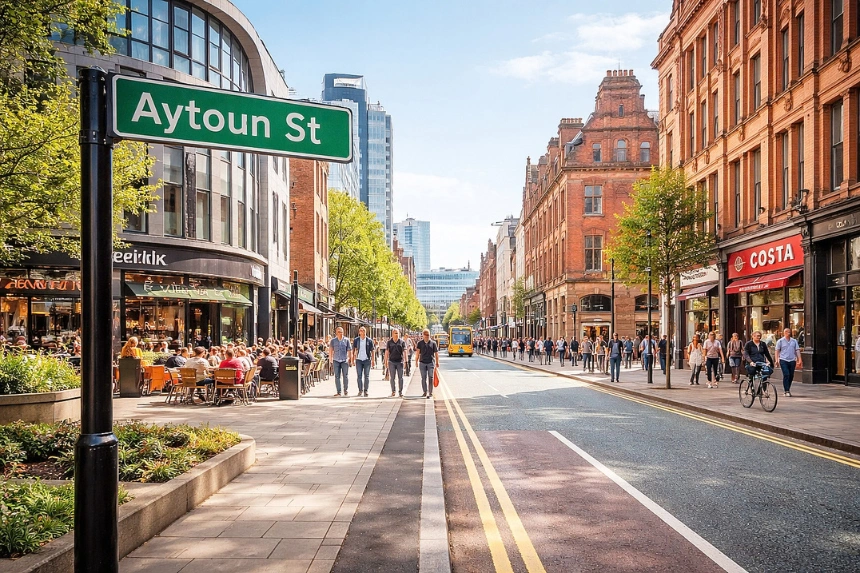
Pedestrian crossings, widened pavements, and cycling routes make the street easy to navigate for walkers and cyclists.
5. Driving
Drivers can reach the street through nearby routes, though like much of central Manchester, some areas include one-way systems and bus lanes during peak hours.
A Brief History
The name “Aytoun” is believed to be connected to Sir Robert Aytoun, reflecting a historical period when city planners often named streets after notable literary or historical figures.
During the 19th century, Manchester experienced rapid industrial growth. The city became famous for its textile industry, and warehouses, mills, and trading buildings filled many central streets, including the area around Aytoun St.
At that time, the street was surrounded by commercial activity related to manufacturing, trade, and transportation. Nearby railway connections and canals helped goods move efficiently through the city.
In the 20th century, however, the decline of traditional manufacturing changed the city centre. Many industrial buildings were repurposed as offices, hotels, or educational facilities. Instead of demolishing all historic structures, Manchester began focusing on preserving historic architecture while modernizing the city.
Today, Aytoun St reflects this transition from an industrial city to a modern urban centre focused on services, tourism, and education.
Streetscape and Architecture
Walking along Aytoun St offers a small but interesting view of Manchester’s architectural history.
The street features a blend of building styles, including
- Victorian brick warehouses
- Edwardian stone buildings with decorative façades
- Modern glass-and-steel developments
Many of the older buildings were originally constructed for industrial or commercial use. Today, these structures often house offices, hotels, or student accommodation.
Architectural features you might notice include
- Arched windows from former warehouse designs
- Decorative cornices and stone carvings
- Cast-iron columns inside refurbished interiors
- Modern glass façades inserted between historic buildings
This mix of old and new creates a visually interesting environment that reflects Manchester’s evolving identity.
Landmarks and Notable Buildings
Although Aytoun St is not a major tourist attraction by itself, several types of important buildings can be found along the street.
1. Historic Warehouses
Many former textile warehouses have been adapted for modern use. Their strong brick structures and large windows make them ideal for office conversions.
2. Hotels and Hospitality
Due to its closeness to Manchester Piccadilly station, the street is home to several hotels. These serve travelers visiting the city for business, conferences, or tourism.
3. Education and Training Facilities
The area is also influenced by its proximity to major universities, including University of Manchester and Manchester Metropolitan University. Educational facilities and student accommodation can be found nearby.
Business and Commercial Environment
Aytoun St provides a practical environment for businesses that want a central location.
Aytoun St attracts a range of businesses due to its central location. These include creative agencies, technology startups, professional services firms, and hospitality businesses.
Refurbished buildings offer flexible office spaces while maintaining historic architectural character. For smaller businesses, the location offers strong visibility and easy access to public transport.
Hotels and restaurants also benefit from steady foot traffic from commuters, visitors, and students.
Residential and Student Life
Although the street itself is largely commercial, residential buildings and student housing are located nearby.
Manchester’s growing student population contributes to the activity in the area. Many students walk through Aytoun St on their way between city-center facilities and university campuses.
Student accommodation buildings often include shared facilities like study rooms, social spaces, laundry areas, and cafés or convenience stores. These amenities help keep the area lively even outside regular office hours.
Nearby Attractions
Visitors walking along Aytoun St are only a short distance from several well-known Manchester destinations.
1. Piccadilly Gardens
A central public square with fountains, green spaces, and a major public transport hub.
2. The Northern Quarter
Known for independent shops, cafés, and vibrant street art.
3. Canal Street
Located in Manchester’s famous Gay Village, this area is known for restaurants, nightlife, and cultural events.
4. Manchester Art Gallery
A respected gallery featuring historic and modern art collections.
These nearby attractions make Aytoun St a convenient starting point for exploring the city centre.
Enhancing Safety and Accessibility
Manchester authorities have improved Aytoun St’s public spaces with brighter street lighting, wider pavements, dropped kerbs for accessibility, and CCTV monitoring. These upgrades make the street safer and more comfortable, though visitors are still advised to stay aware and use well-lit routes at night.
Tips for Visitors to Aytoun St
Visiting Aytoun St is easy, but a few tips can make your experience smoother and more enjoyable:
Plan Your Transport: The street is close to Manchester Piccadilly Station and Piccadilly Gardens, making trains, trams, and buses convenient options. Consider peak times to avoid crowds.
Walk Comfortable: The area is best explored on foot, so wear comfortable shoes and allow extra time for sightseeing or errands.
Check Accessibility: Many buildings are refurbished with lifts and ramps, but entrances can vary. If you need step-free access, confirm in advance.
Stay Weather-Ready: Manchester weather can change quickly. Carry a light waterproof jacket and umbrella.
Be Mindful of Traffic: Some parts of the city centre have bus lanes and one-way streets. Stick to pedestrian crossings for safety.
Use Contactless Payments: Trams and buses accept contactless cards or devices, which saves time on short trips.
Keep Valuables Secure: Like any busy city center, be aware of your surroundings, especially at night or in crowded areas.
Conclusion
Aytoun St may not be the longest or most famous street in Manchester, but it plays a valuable role in the city’s daily rhythm. Positioned near major transport links and surrounded by important institutions, the street acts as a connector between commerce, education, and tourism.
Its architecture tells a story of Manchester’s transformation from a 19th-century industrial powerhouse to a modern global city. Historic warehouses now host offices, hotels welcome travelers from around the world, and students move through the area as part of the city’s thriving academic environment.
In many ways, Aytoun St represents the spirit of Manchester itself: practical, historic, and constantly evolving. Even as the city continues to grow and modernize, this small but important street will remain part of the living fabric of Manchester’s urban life.