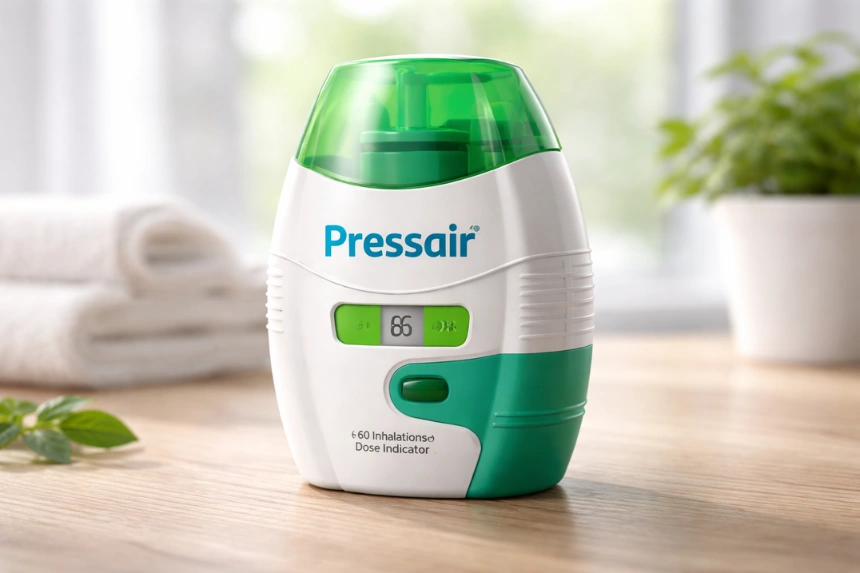
Pressaire Inhaler: Features, Usage, and Benefits for COPD Treatment
Introduction
Pressaire is a breath-activated dry powder inhaler commonly prescribed for managing chronic obstructive pulmonary disease (COPD). Designed to deliver medication directly into the lungs with a strong inhalation, Pressaire helps relax airway muscles and improve breathing over time. Its unique features include a color-changing indicator and audible click to confirm proper use, making it a reliable maintenance inhaler for long-term symptom control.
What Is Pressaire (Pressair)?
Pressair is a breath-activated dry powder inhaler that delivers a measured dose of medication into the lungs. It is used mainly to treat chronic obstructive pulmonary disease (COPD), a long-term lung disease that includes chronic bronchitis and emphysema.
Unlike some inhalers that release medicine when you press a button, Pressair releases medication when you take a strong breath through the mouthpiece. This design helps ensure the medicine goes directly into the lungs.
Many COPD medicines are available in this device, including:
- Aclidinium bromide (a bronchodilator)
- Aclidinium + formoterol combination inhalers such as Duaklir Pressair
These medicines help relax airway muscles and improve airflow so breathing becomes easier.
Why Doctors Prescribe Pressair
Pressair inhalers are used for the long-term control of COPD symptoms. They help reduce problems such as shortness of breath, wheezing, chronic coughing, chest tightness, and poor airflow by relaxing the muscles around the airways, which allows air to move more easily through the lungs. It’s important to know that Pressair is a maintenance inhaler, meaning it helps prevent symptoms over time and is not meant for sudden breathing emergencies.
Types of Pressair Inhalers
There are two common forms of medication delivered through the Pressair device.
1. Aclidinium Pressair
This inhaler contains aclidinium bromide, a long-acting bronchodilator that keeps airways open for many hours.
Doctors often prescribe it twice a day to control COPD symptoms.
2. Duaklir Pressair
This version contains two medicines:
- Aclidinium
- Formoterol (a long-acting beta-agonist)
Together they help open the airways more effectively and improve breathing for some patients.
How the Pressair Inhaler Device Works
Pressair is designed to be simple and reliable. It uses a dry powder inhalation system.
When you inhale through the mouthpiece:
- The device releases a pre-measured dose of medication.
- The medicine travels into the lungs.
- The airway muscles relax.
- Breathing becomes easier.
The device also has helpful feedback features:
- A click sound confirms you inhaled correctly.
- A color window changes from green to red after the dose is taken.
- A dose counter shows how many doses remain.
These features help patients know whether they used the inhaler properly.
Step-by-Step: How to Use a Pressair Inhaler
Using the inhaler correctly is very important. Incorrect technique can prevent medicine from reaching the lungs.
Follow these steps:
1. Prepare the inhaler
Remove the cap and hold the inhaler upright.
2. Load the dose
Press and release the green button to prepare the medicine.
3. Check the indicator window
The window should show green, meaning the inhaler is ready.
4. Breathe out
Exhale fully, but not into the inhaler.
5. Inhale the medicine
Place the mouthpiece in your mouth and take a strong, deep breath in.
You may hear a click, which means the inhaler worked correctly.
6. Hold your breath
Hold your breath for several seconds to allow the medicine to reach your lungs.
7. Check the window again
If it turns red, the dose was delivered successfully.
Practical Tips for Better Results
Many articles explain how to use inhalers, but they do not explain the small details that make a big difference. Here are some helpful tips:
1. Use a strong inhalation
Pressair is breath-activated, so weak inhalation may not deliver the full dose.
2. Do not shake the inhaler
Dry powder inhalers like Pressair do not require shaking.
3. Keep the mouthpiece dry
Moisture can affect the powder medication.
4. Track the dose counter
The device usually contains about 60 doses. Replace it when the counter reaches zero.
5. Practice inhaler technique regularly
Ask your doctor or pharmacist to watch your technique at least once a year.
Poor inhaler technique is one of the most common reasons COPD treatments fail.
Common Side Effects
Like all medications, Pressair inhalers may cause side effects in some people. Most side effects are mild and temporary, but it is still important to be aware of them. Common side effects can include headache, cough, cold-like symptoms, sore throat, and nasal infections. These symptoms are usually mild and often improve as the body adjusts to the medication.
In rare cases, more serious side effects may occur. These can include allergic reactions, sudden worsening of breathing right after using the inhaler, difficulty urinating (urinary retention), or increased eye pressure in people who have glaucoma. If you experience severe symptoms or anything unusual after using the inhaler, it is important to seek medical advice and contact a healthcare professional as soon as possible.
Who Should Not Use Pressair
Pressair inhalers are not suitable for everyone, so it is important to speak with a doctor before using one. People who have severe allergies to any of the inhaler’s ingredients should avoid it. Medical advice is also necessary for individuals with asthma who are not receiving proper combination treatment, as well as those with certain eye conditions such as narrow-angle glaucoma. In addition, people who have urinary retention or prostate problems should discuss the risks with their healthcare provider. Pressair inhalers are generally designed for adults with COPD and are not recommended for children.
How to Store Pressair Safely
Proper storage helps keep the inhaler effective.
Best practices include:
- Store at room temperature
- Keep away from heat and direct sunlight
- Store in a dry place
- Do not open the sealed bag until ready to use
- Replace the inhaler when the dose counter reaches zero or after the recommended usage period.
Common Problems and How to Fix Them
Sometimes people experience small issues when using inhalers. Here are some simple solutions.
1. No Taste of Medicine
Some people think the inhaler is not working if they cannot taste the medicine. However, dry powder inhalers often have very little taste. Check the dose counter to confirm that a dose was taken.
2. Throat Irritation
If your throat feels irritated after using the inhaler, try rinsing your mouth with water and spitting it out.
3. Difficulty Using the Device
If the inhaler feels confusing, ask your doctor, nurse, or pharmacist to watch you use it and guide you. Correct inhaler technique makes a big difference.
Final Thoughts
Pressaire (Pressair) inhalers play an important role in managing COPD. By delivering medication directly into the lungs, they help relax airway muscles and improve breathing over time.
What makes Pressair unique is its breath-activated system and dual feedback design, which help patients confirm they used the inhaler correctly.
However, like any inhaler, it works best when used properly and consistently. Learning the right technique, monitoring doses, and following your doctor’s instructions can make a significant difference in controlling COPD symptoms and improving quality of life.
Frequently Asked Questions
No. Pressair inhalers are maintenance inhalers used daily to control COPD symptoms. They do not work quickly enough for sudden breathing problems.
Most Pressair inhalers are approved for adults with COPD. A doctor will decide if a medicine is suitable for a child.
Take the next dose at the normal time. Do not take extra doses unless your doctor tells you to.