Acupunctoscope 2026: Complete Guide to Digital Devices & Uses
Introduction
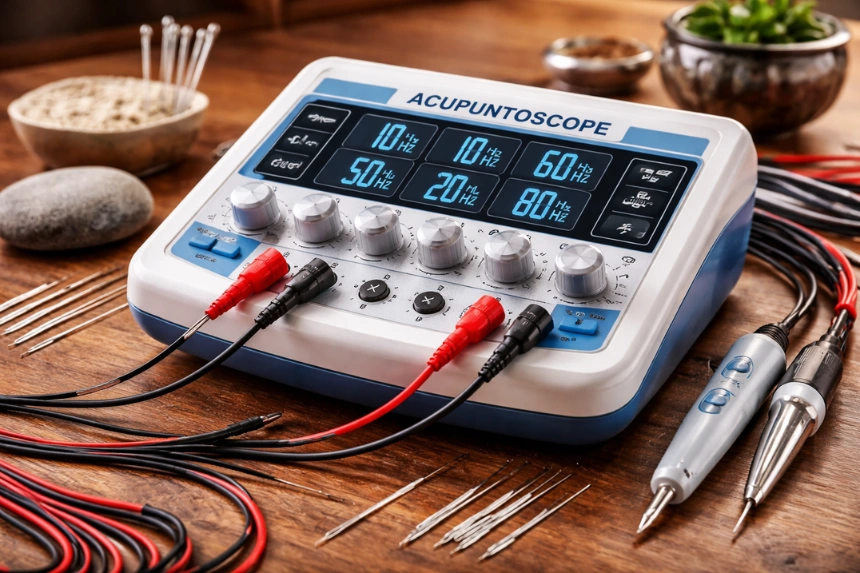
Electro-acupuncture is transforming traditional acupuncture practices by combining ancient principles with modern electronics. At the heart of this innovation is the acupunctoscope, a specialized device that helps practitioners detect acupuncture points and deliver controlled electrical stimulation through needles. This guide will explain what an acupunctoscope is, review popular models like the AWQ-100B, WQ-10D1, and AWQ-104L, and provide practical advice on using, maintaining, and selecting these devices.
What Is an Acupunctoscope?
An acupunctoscope, also called an electronic acupunctoscope, is a device that detects acupuncture points using skin conductance and delivers low-voltage electrical stimulation through needles. Practitioners use a probe or clips on needles; the device signals when a true point is found, then allows safe microcurrent stimulation.
Modern acupunctoscopes allow adjustments for frequency (e.g., 1-100 Hz for low frequency and 10-1000 Hz for high frequency), intensity (up to about 20-40 mA depending on the model), and pulse patterns (continuous, intermittent, dense-disperse). Polarity switches help adjust the direction of current for different treatment goals.
In simple terms, the acupunctoscope is a combination of a precise point locator and a controlled low-level stimulator, improving the accuracy and consistency of acupuncture treatments.
Key Acupunctoscope Models
1. AWQ-100B (Bio-Tech)
The AWQ-100B is an older 2nd-generation acupunctoscope, introduced around 1988. It is a multipurpose device that can detect acupuncture points and provide electrical stimulation.
- Channels: 1-2 outputs
- Frequency: X1 (0-100 Hz) and X10 (0-1000 Hz)
- Modes: Continuous, intermittent, dense-disperse
- Power: 9V battery
- Display: None (analog meter or LED indicators)
- Special features: Polarity change-over switch for tonification/sedation
- Price: ~$70-90 (used/surplus)
This model was widely used in the US for investigational purposes but had no official regulatory approval. Today, it is mostly available as surplus or collector equipment.
2. WQ-10D1 (Donghua)
The WQ-10D1 is a mid-range acupunctoscope from Beijing’s Donghua factory. Often used in clinical research, it is a 3-channel device capable of stimulating up to 6 needles simultaneously.
- Channels: 3 outputs
- Frequency: Likely 1-100 Hz and 10-1000 Hz
- Modes: Continuous/intermittent/dense (analog control)
- Display: Analog (no LCD)
- Power: 9V battery
- Use cases: Postoperative pain management, auricular acupuncture, and other pain therapies
While specifications are less clear than the AWQ-104L, the WQ-10D1 is valued for its reliable point detection and moderate channel capacity.
3. AWQ-104L (Tens Plus/Lhasa OMS)
The AWQ-104L is a modern, 4-channel digital acupunctoscope. It improves on older models by offering a large LCD, precise digital control, and adjustable high/low voltage modes.
- Channels: 4 independent channels (plus optional hand probe)
- Frequency: X1 = 1-100 Hz, X10 = 10-999 Hz
- Pulse width: 320 µs (X1), 32 µs (X10)
- Modes: Continuous, intermittent, dense-disperse
- Display: LCD showing frequency and mode; LED indicators for operation
- Output: 0-18 mA low-mode, 0-40 mA high-mode (500Ω load)
- Power: 9V battery
- Certification: CE0197 (Europe)
- Price: ~$300-330
Compared to older models, the AWQ-104L offers better control, reliability, and visualization of settings, making it suitable for clinics, teaching, and professional use.
Competitor Example: E600 “HAN” Acupunctoscope
For context, the E600 HAN Acupunctoscope is a high-end competitor:
- Channels: 6 outputs
- Waveforms: Includes proprietary HAN waveform, sine, and square pulses
- Power: Mains adapter (no battery)
- Display: Digital for each channel
- Price: ~$500
This shows the range of acupunctoscopes: AWQ-104L offers mid-range functionality at a lower price, while high-end units provide extra channels and waveform options.
Technical Comparison of Popular Acupunctoscopes
| Model | Channels | Frequency Range | Modes | Display | Power | Certification |
| AWQ-100B | 1–2 | 0–100 Hz / 0–1000 Hz | Continuous / Intermittent / Dense | Analog | 9V battery | None |
| WQ-10D1 | 3 | 1–100 Hz / 10–1000 Hz | Continuous / Intermittent / Dense | Analog | 9V battery | None |
| AWQ-104L | 4 | 1–100 Hz / 10–999 Hz | Continuous / Intermittent / Dense-disperse | LCD | 9V battery | CE0197 |
| E600 HAN | 6 | Varies | Multiple proprietary waveforms | Digital | Mains | CE / UKCA |
Typical Uses in Practice
Acupunctoscopes are designed for the same conditions as manual acupuncture, but with added precision and controlled electrical stimulation.
1. Pain Management
They are commonly used to relieve chronic pain, including neck pain, low back pain, and knee osteoarthritis. The device allows consistent stimulation to targeted points for effective relief.
2. Sports Injuries
For athletes and active individuals, acupunctoscopes help treat muscle strains, joint injuries, and support rehabilitation by enhancing circulation and promoting recovery.
3. Neurological Issues
Electro-acupuncture can aid patients with neuropathy or other nerve-related conditions, providing gentle electrical stimulation to improve nerve function and reduce discomfort.
4. Auricular Therapy
Acupunctoscopes are particularly useful for auricular (ear) acupuncture, helping practitioners locate precise points quickly and accurately.
5. Postoperative Recovery
These devices can support recovery after surgery by reducing inflammation and alleviating pain at targeted acupuncture points.
6. Frequency and Mode Benefits
Low-frequency stimulation (1-10 Hz) promotes endorphin release for natural pain relief, while higher frequencies (50-100 Hz) target opioid receptor modulation. Dense-disperse modes alternate pulses to prevent nerve accommodation and enhance therapeutic effects.
Safety and Regulatory Considerations
In the United States, acupunctoscopes are classified as prescription-class devices (FDA product code BWK), meaning their use is restricted to trained practitioners. To ensure safety, they should only be applied to clean, intact skin, and care must be taken to avoid patients with pacemakers or other electronic implants. Pregnant patients should not receive stimulation on the abdomen or sacral areas, and treatments should always begin at the lowest current intensity. Compliance with local laws regarding the sale and use of these devices is essential.
In Europe, models like the AWQ-104L carry CE certification, signaling that they meet established safety standards. Regardless of location, proper training and strict adherence to usage protocols are crucial to prevent adverse effects such as burns, fainting, or muscle spasms, ensuring treatments remain both safe and effective.
Clinical Evidence
Electro-acupuncture (EA) has been studied extensively. Some findings include:
Chronic neck pain: EA provides greater pain relief than sham or no treatment (Guangzhou RCT, 2025)
Diabetic neuropathy and osteoarthritis: EA improves pain scores and physical function compared to controls
Postoperative pain: EA reduces opioid requirement and accelerates recovery
Adverse effects are usually mild, such as temporary soreness or fatigue. Correct placement of electrodes, proper intensity, and trained operation minimize risks.
Common Problems Users Notice
Like many clinic devices, acupunctoscopes have strengths and weaknesses. Some users say older or budget models may feel less durable, especially the knobs, clips, or wires. Batteries can also become a problem because many units use a 9V battery, and weak battery power can reduce performance.
Point detection can also be affected by skin moisture, lotion, or poor probe angle. That means the device works best when the operator has good technique and the skin is prepared properly.
Even with these issues, many users find the devices helpful because they make stimulation more consistent and offer a practical way to locate points.
How to Choose the Right Acupunctoscope
Choosing the right unit depends on the type of work being done. A practitioner should think about channel count, display quality, pulse modes, portability, and support from the seller.
If simple treatment and low cost are the main goals, an older unit like the acupunctoscope AWQ-100B may seem attractive. If more channels are needed for broader clinical use, the acupunctoscope WQ-10D1 offers a step up. If the goal is modern control, easier reading, and more daily convenience, the AWQ-104L digital electro-acupunctoscope is usually the stronger option.
It is also wise to look for clear manuals, reliable cables, and certification details when available. A machine may look good in a photo, but practical support and safe operation matter much more in real clinical use.
Maintenance and Sterilization
To keep an acupunctoscope safe and functioning properly, clean the device and cables with disinfectant after each use. Regularly inspect leads and clips, replacing any that are frayed or worn. Probes and electrodes should be wiped with 70% isopropyl alcohol, and the device should be stored in a cool, dry case away from shocks or magnetic interference. Batteries should be replaced regularly to ensure consistent performance, and all care should follow the manufacturer’s instructions and professional infection-control guidelines.
Contraindications and Safety Precautions
Patients with pacemakers or epilepsy should generally not be treated with electro-acupuncture devices. Practitioners should also avoid using stimulation on the abdomen or sacral area during pregnancy.
Extra caution is needed in patients with heart disease, skin lesions, or areas affected by cancer. The intensity should always be increased slowly and should never become painful. It is also important to get proper informed consent before treatment and monitor the patient carefully throughout the session.
Conclusion
Acupunctoscopes like the AWQ-100B, WQ-10D1, and AWQ-104L provide modern tools for precise acupuncture point detection and controlled electro-acupuncture therapy. While older units offer basic functionality at a low cost, modern digital devices improve control, usability, and safety. Practitioners should consider channels, modes, display, certification, and user support when choosing a device. Proper use, maintenance, and adherence to safety protocols ensure effective and safe treatments.