Introduction
When it comes to construction, knowing the size of bricks is very important. Whether you are building a wall, a house, or doing a DIY project, the right brick size ensures your work is strong, safe, and looks good. In the UK, there are standard brick sizes, but there are also variations depending on the type of brick and its use. This guide will explain everything you need to know about brick sizes in the UK in a simple and easy-to-understand way.
Why Brick Size Matters
Brick size is not just about appearance, it affects the strength, stability, and cost of a project. Using bricks that are too big or too small can cause problems like uneven walls, weak structures, and extra costs. Standard brick sizes make it easier for builders to plan, calculate materials, and ensure walls are uniform.
Standard Brick Sizes in the UK
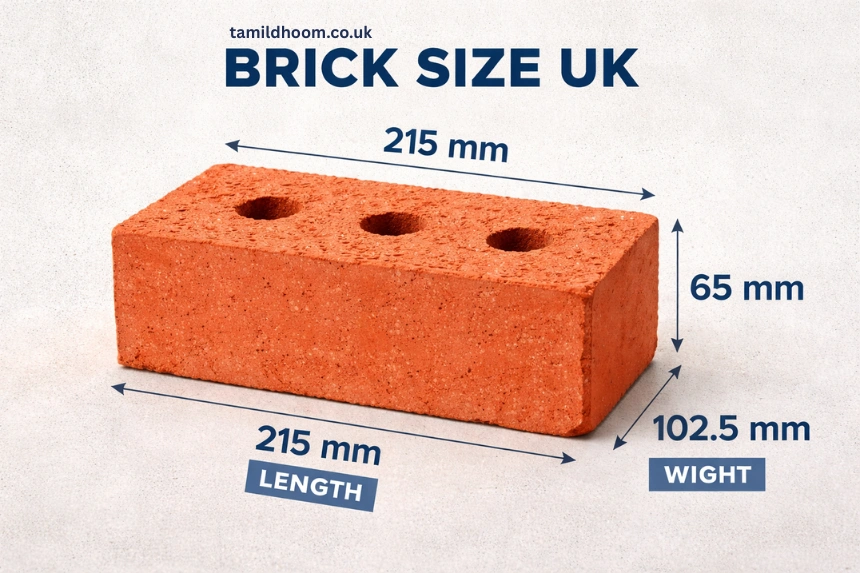
In the UK, the most common brick size is called the modular brick. The standard dimensions are:
- Length: 215 mm
- Width (or depth): 102.5 mm
- Height: 65 mm
This size is designed so that with mortar, it forms a simple 225 mm x 112.5 mm x 75 mm module, a standard unit that helps in planning walls and structures.
For complex projects, professional draughting can help you visualize how these units fit into your overall architectural design.”
Other less common standard sizes include:
- King Size: 290 mm × 90 mm × 90 mm
- Queen Size: 230 mm × 110 mm × 76 mm
- Imperial Size: 228 mm × 114 mm × 76 mm
These sizes are mainly used for special projects or older buildings, but modular bricks are the most widely used today.
Types of Bricks in the UK
Brick sizes can vary slightly depending on the type of brick. Some common types include:
Clay Bricks: Traditional bricks made from clay. Usually, they follow the standard modular size.
Concrete Bricks: Made from cement and aggregates. Slightly larger sizes are sometimes used for faster construction.
Engineering Bricks: Stronger bricks often used in foundations or damp areas. Slightly thicker or taller than standard bricks.
Facing Bricks: Bricks used for the exterior of buildings to give a neat appearance. They often follow standard modular sizes for easy laying.
How to Measure a Brick
Measuring bricks correctly is important if you are calculating materials. Always measure:
Length: Measure the longest side of the brick (215 mm for a standard modular brick).
Width (Depth): Measure the thinner side (102.5 mm for standard bricks). This is the part that goes into the wall thickness.
Height: Measure the vertical side (65 mm for standard bricks), which determines the wall’s course height.
Using a precision tool like a messfeder ensures that your measurements remain consistent, even when dealing with small manufacturing tolerances.
When calculating the total bricks needed, remember that mortar adds about 10 mm between bricks, Using a high-performance material like bimortar is essential for ensuring the joints are waterproof and durable against the UK weather.
Calculating Bricks for a Project
Knowing brick size helps you estimate how many bricks you need. Here’s a simple method:
- Measure the wall area: Height × Length
- Measure the brick with mortar: Standard brick + 10 mm mortar
- Divide the wall area by the brick area: This gives the number of bricks needed
For example:
- Wall: 2 m × 5 m = 10 m²
- Brick with mortar: 225 mm × 75 mm = 0.016875 m²
- Bricks needed: 10 ÷ 0.016875 ≈ 593 bricks
Always add 5-10% extra for breakage and cuts.
Variations in Brick Size
Even though there are standard brick sizes in the UK, it’s important to remember that not all bricks are exactly the same. Small differences can occur due to several factors, and knowing about them helps avoid mistakes during construction.
Manufacturing Tolerances: Bricks are made in large batches using machines, and tiny differences in the molding process can lead to slight variations in size. For example, a brick might be a millimeter or two larger or smaller than the standard 215 mm × 102.5 mm × 65 mm.
Shrinkage During Firing: Clay bricks are fired in a kiln at high temperatures. During this process, the bricks can shrink slightly, usually by 2–5 mm, depending on the type of clay and firing method. This means a “standard” brick from one batch might be slightly smaller than another batch.
Custom or Specialty Bricks: Renovation projects, decorative walls, or heritage buildings sometimes require non-standard bricks. These bricks may be longer, taller, or thinner than the typical modular brick to match older construction styles or special designs.
Because of these variations, professional builders always plan carefully. They allow for slight differences when calculating the number of bricks, spacing, and mortar thickness. Tips for Buying Bricks in the UK
Tips for Buying Bricks in the UK
Know the Sizes: Standard UK bricks are 215 × 102.5 × 65 mm. Check dimensions to plan walls and calculate materials.
Choose the Right Type: Clay for durability, concrete for strong walls, engineering for foundations, facing bricks for looks.
Check Quality: Avoid cracked or uneven bricks; consistency ensures strong, level walls.
Calculate Quantity: Measure wall area, include mortar, and add 5–10% extra for cuts and breakage.
Consider Mortar & Method: Mortar adds ~10 mm; ensure bricks suit your wall pattern or special designs.
Match Appearance: For visible walls, keep color and finish consistent by buying from the same batch.
Buy From Trusted Suppliers: Quality suppliers provide standard sizes and advice.
Plan Storage: Store bricks on a dry, level surface to prevent damage before use.
Common Mistakes to Avoid When Using Bricks
Ignoring Mortar: Always include the ~10 mm mortar thickness in measurements.
Mixing Sizes: Using different brick sizes can make walls uneven.
Underestimating Quantity: Add 5–10% extra for cuts, breakage, or mistakes.
Wrong Brick Type: Some bricks are harder to cut or unsuitable for certain walls.
Poor Quality: Avoid cracked or chipped bricks to ensure strong, even walls.
Bad Storage: Keep bricks on a dry, level surface to prevent damage.
Ignoring Wall Design: Special patterns or arches need specific bricks.
Conclusion
Understanding brick size in the UK is essential for any builder or DIY enthusiast. The standard modular brick makes planning and construction easier, but it’s important to know about variations, types, and correct measurements. By using the right bricks and calculating carefully, you can ensure your project is strong, safe, and looks great.