Introduction
In modern agriculture, getting the most out of your crops often depends on how well you apply fertilizers, herbicides, or pesticides. One tool that can make a big difference is Brushwet, a non-ionic organosilicone surfactant. But what exactly is Brushwet, and why is it so important? Let’s break it down.
What is Brushwet?
Brushwet is a chemical additive used in agriculture to improve the effectiveness of sprayed solutions. Technically, it’s a non‑ionic organosilicone surfactant, which means it reduces the surface tension of water.
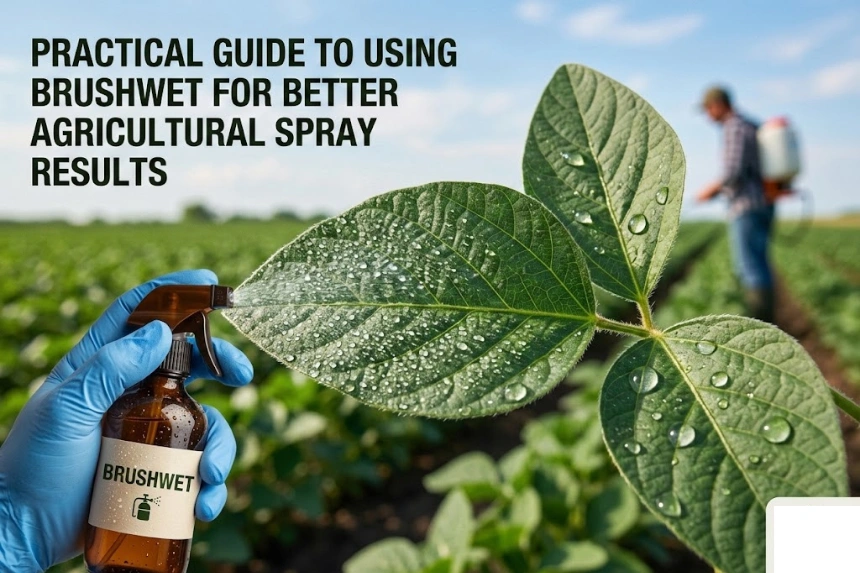
When you spray water-based chemicals on plants, the droplets can sometimes bead up and roll off leaves, reducing the amount of chemical that actually sticks. Brushwet helps water and chemicals spread evenly over plant surfaces, improving wetting and penetration.
How Brushwet Works?
Brushwet improves how water and chemicals behave on plant surfaces, making sprays more effective. Here’s what happens in real-life use:
Droplets Spread Instead of Beading: On leaves, water usually forms round beads that can roll off, especially on waxy or hairy surfaces. Adding Brushwet helps the droplets flatten and spread, covering more of the leaf. You’ll notice the leaves stay wet longer and chemicals don’t run off as easily.
Better Coverage: Because droplets spread evenly, herbicides, pesticides, or fertilizers coat the entire leaf surface. For example, when spraying a pesticide on tomato leaves, Brushwet ensures even coverage even on the undersides, where pests often hide.
Improved Penetration: Some chemicals, especially systemic herbicides or foliar fertilizers, need to penetrate the leaf surface to work. With Brushwet, the spray solution can enter small leaf pores or waxy layers more effectively, so plants absorb nutrients or active ingredients faster.
Visible Results: Farmers often see leaves staying wet longer after spraying, fewer missed spots, and more consistent pest or weed control. Over time, this translates to less chemical waste, stronger crop growth, and potentially higher yields.
Tip: To see it in action, try spraying a small area with your regular solution, then the same with Brushwet. You’ll notice the second area stays wet longer, spreads better, and absorbs faster.
Benefits of Using Brushwet
Using Brushwet in agricultural sprays comes with multiple benefits:
1. Enhanced Spray Efficiency
Chemicals cover plant surfaces more evenly, ensuring no part of the leaf is missed.
2. Reduced Chemical Waste
Since more of the spray sticks and penetrates, farmers can use smaller amounts of chemicals while maintaining effectiveness.
3. Improved Rainfastness
Sprays with Brushwet are less likely to wash off during light rain, keeping plants protected.
4.Better Control of Pests and Diseases
By improving chemical coverage, pest and disease control becomes more reliable.
5. Safe for Most Crops
Being a non-ionic surfactant, Brushwet generally doesn’t react negatively with most fertilizers or pesticides when used correctly.
How to Use Brushwet
Using Brushwet is simple, but following the right steps is important for safety and effectiveness:
1. Check Compatibility
Before mixing, make sure Brushwet is compatible with your pesticide, herbicide, or fertilizer.
2. Mix Properly
Add the recommended amount of Brushwet to water first, then add your chemicals. This ensures proper distribution.
4. Follow Manufacturer Instructions
Every crop and chemical may have specific guidelines for dosage. Always follow the instructions.
5. Spray Evenly
Use equipment that ensures uniform coverage. Brushwet will help the spray stick and spread efficiently.
6. Avoid Overuse
Using more than recommended doesn’t always improve performance and may cause plant damage in rare cases.
Common Problems Brushwet Helps Solve
Here are some common spray problems and how brushwet helps:
| Problem | How Brushwet Helps |
|---|---|
| Spray droplets roll off leaves | Reduces surface tension so droplets spread |
| Poor weed control | Improves penetration of herbicides |
| Uneven coverage | Helps liquid spread more evenly |
| High chemical costs | Reduces waste and improves efficiency |
Real-World Applications of Brushwet in Farming
1. Corn Field Weed Control
When herbicide failed to stick to waxy weed leaves, adding brushwet helped the spray spread evenly and penetrate better. The result was stronger weed control and less chemical waste.
2. Apple Tree Disease Protection
Fungicide was not covering apple leaves properly due to their waxy surface. With brushwet, the spray formed a thin, even layer, improving coverage and helping protect the trees from disease.
3. Greenhouse Vegetable Spraying
In cabbage crops, insecticide struggled to reach hidden pests. Brushwet improved spreading and coverage, allowing the spray to reach difficult areas and deliver better pest control.
4. Spraying in Hot Weather
During hot conditions, spray droplets dried too quickly. Brushwet helped droplets spread faster before drying, leading to more even coverage and improved results.
5. Foliar Fertilizer Application
When foliar fertilizer did not spread evenly on leaves, brushwet improved coverage and absorption. This helped plants take in nutrients more effectively and grow stronger.
Tips for Getting the Best Results with Brushwet
1. Use the Recommended Dosage
Stick to the label instructions. Adding too much Brushwet won’t improve results and can sometimes harm sensitive plants.
2. Spray at the Right Time of Day
Early morning or late afternoon is best. Avoid spraying in the heat of the day, as evaporation can reduce effectiveness.
3. Check Weather Conditions
Light wind is fine, but strong winds can blow sprays away. Avoid spraying just before heavy rain, which can wash chemicals off leaves.
4. Ensure Sprayer is Clean and Calibrated
Residue from previous chemicals or clogged nozzles can reduce coverage. Clean and adjust your sprayer regularly.
5. Mix Properly
Add Brushwet to water first, then add your chemicals slowly while stirring. This ensures even distribution and prevents foaming.
6. Target Leaves Correctly
Spray both upper and lower leaf surfaces when possible, as pests and diseases often hide underneath leaves. Brushwet helps the solution spread evenly.
7. Avoid Overlapping Sprays
Uniform coverage is better than repeated spraying over the same area. Overlapping can cause run-off and waste.
8.Use Compatible Chemicals
Some pesticides, herbicides, or fertilizers may react poorly with surfactants. Always check compatibility to prevent plant damage.
Conclusion
Brushwet is more than just a chemical additive, it’s a tool that helps farmers and gardeners get the most out of their sprays. By improving wetting, spreading, and penetration, it ensures chemicals stick better, work more effectively, and reduce waste.