Introduction
Boilers play an important role in many homes. They provide hot water for bathing, washing dishes, and heating rooms during cold weather. Most of the time, they work quietly without any problems. But when an error code appears on the display, it can cause confusion and stress.
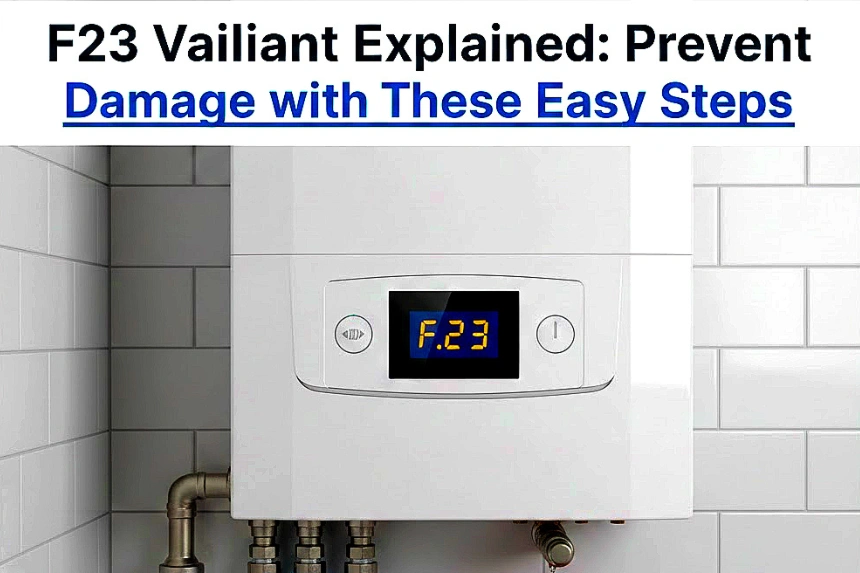
One common error that many homeowners see is F23 Vaillant. If this message appears on your boiler screen, it means the system has detected a problem that needs attention. In this guide, you will learn what F23 Vaillant means, why it happens, how serious it is, and how you can fix it. Everything is explained in simple and easy language.
What Is F23 Vaillant?
The F23 error code appears on boilers made by Vaillant, a trusted manufacturer of heating systems. This code tells you that there is an excessive temperature difference between the flow pipe and the return pipe in your heating system.
Understanding Flow and Return Pipes
To understand this better, it helps to know how your heating system works. When your boiler heats water, it sends the hot water through the flow pipe to your radiators. The radiators release heat into your rooms. After the water cools down, it travels back to the boiler through the return pipe.
The temperature difference between the hot water leaving the boiler and the cooler water returning should stay within a safe range. If the difference becomes too large, the boiler detects a problem and displays the F23 error.
Why Does the F23 Error Happen?
In most cases, F23 Vaillant happens because water is not circulating properly through the system. When water flow is restricted or slowed down, the return water becomes much cooler than it should be.
1. Low Water Pressure
Low pressure is one of the most common reasons for this fault. If there is not enough pressure inside the system, water cannot move smoothly through the pipes and radiators. This can create a large temperature gap between the flow and return pipes.
Most boilers work best when the pressure is between 1 and 1.5 bar while the system is cold.
2. Blocked or Dirty System
Over time, heating systems can collect dirt, rust, and sludge. These materials can build up inside pipes and radiators. When this happens, water flow becomes restricted. Poor circulation leads to a bigger temperature difference, which triggers the F23 code.
3. Faulty Pump
The pump inside the boiler pushes hot water around your home. If the pump becomes weak or stops working, water cannot circulate properly. As a result, the boiler may detect an imbalance in temperature and shut down for safety.
4. Air Trapped in Radiators
Sometimes air gets trapped inside radiators. This prevents water from filling the entire radiator and reduces heat flow. Air pockets can disturb circulation and cause uneven heating throughout the house.
5. Faulty Temperature Sensors
Modern Vaillant boilers use sensors to measure the temperature of both the flow and return water. If one of these sensors gives incorrect readings, the boiler may think there is a serious temperature difference even if everything else is working normally.
Is F23 Vaillant Dangerous?
The F23 error is usually not dangerous. It is a built-in safety feature designed to protect the boiler from overheating or internal damage.
Why the Boiler Shuts Down
When the system detects an unusual temperature gap, it shuts down automatically. This prevents parts inside the boiler from becoming damaged. While the shutdown may be inconvenient, it helps avoid more serious problems.
Warning Signs Before the Error Appears
Sometimes there are small warning signs before the F23 code shows up on the screen.
1. Uneven Heating
You may notice that some radiators are warm while others stay cold. Some rooms may feel colder than usual.
2. Frequent On and Off Cycling
The boiler may turn on and off more often than normal. This can be a sign of circulation problems.
3. Strange Noises
Gurgling or unusual sounds from radiators or pipes may indicate trapped air or restricted water flow.
Recognizing these signs early can help you fix the problem before it becomes serious.
How to Fix F23 Vaillant
Some simple steps can solve the problem. However, if the issue continues, professional help may be needed.
1. Check the Boiler Pressure
Start by checking the pressure gauge on your boiler. If the pressure is below 1 bar, you may need to add water to the system using the filling loop. After adjusting the pressure, try resetting the boiler.
2. Bleed the Radiators
If air is trapped inside the radiators, bleeding them can help restore proper water flow. After releasing the air, check the boiler pressure again because it may drop slightly.
3. Reset the Boiler
Many Vaillant boilers have a reset button. Pressing and holding the reset button for a few seconds may clear the fault if the issue was temporary.
4. Contact a Qualified Engineer
If the error continues, it may be caused by a faulty pump, heavy sludge buildup, or a damaged sensor. A trained heating engineer can inspect the system safely and make the necessary repairs.
Avoid opening the boiler casing yourself unless you are certified to do so. Boilers contain gas and electrical components that can be dangerous.
How Much Does It Cost to Fix F23 Vaillant?
Repair costs vary depending on the cause:
| Problem | Typical Cost Range |
|---|---|
| Bleeding radiators | Free (DIY) |
| System pressure top-up | Free (DIY) |
| Pump replacement | £150 – £350 |
| Powerflush | £300 – £600 |
| Sensor replacement | £80 – £200 |
How to Prevent F23 in the Future
Regular maintenance can help reduce the risk of seeing the F23 error again.
1. Annual Boiler Servicing
Having your boiler serviced once a year ensures that all parts are checked and cleaned if necessary. Regular servicing keeps the system running efficiently.
2. Maintain Proper Pressure
Check the pressure gauge every few months. Keeping the pressure within the recommended range helps maintain smooth water circulation.
3. Keep the System Clean
In older systems, sludge can build up over time. Cleaning the system or installing a magnetic filter can help keep water clean and reduce blockages.
Final Thoughts
The F23 Vaillant fault code means there is a large temperature difference between the hot water leaving the boiler and the cooler water returning to it. This usually happens because water is not circulating properly through the heating system.
Common causes include low pressure, trapped air, blockages, pump problems, or faulty sensors. Although the error is not usually dangerous, it should be fixed promptly to prevent further issues.