HTM 01-05 Guidelines Explained: Ensuring Infection Control in Dental Practices
Introduction
Dental clinics are busy places where patient safety is the top priority. One of the most important aspects of safety in dentistry is making sure that all reusable instruments are properly cleaned, disinfected, and sterilized. This is where HTM 01-05 comes into play. But what exactly is HTM 01-05, and why is it so crucial for dental practices?
What is HTM 01-05?
HTM 01-05 is a guideline developed in the United Kingdom that provides clear instructions on how dental practices should handle reusable instruments. Its main goal is to prevent infections and ensure that patients receive treatment in a safe, hygienic environment.
The full name of the document is “Health Technical Memorandum 01-05: Decontamination in Primary Care Dental Practices.” It covers every stage of instrument handling, from cleaning to storage, and sets standards that dental clinics must follow.
Why HTM 01-05 Matters in Dentistry
Dental instruments, such as forceps, scalers, and drills, can carry harmful bacteria, viruses, and other pathogens if they are not properly sterilized. Even a tiny mistake in instrument handling can lead to serious infections.
Following HTM 01 05 dental guidelines helps dental teams keep patients safe, prevent infections, comply with UK regulations including CQC HTM 01 05, and maintain a professional, hygienic clinic environment.
Key Steps in HTM 01-05 Instrument Decontamination
The HTM 01-05 guidelines provide clear steps to ensure dental instruments are safe for patient use. Each stage, cleaning, disinfecting, sterilizing, and storing, is essential to prevent infection.
1. Cleaning Instruments
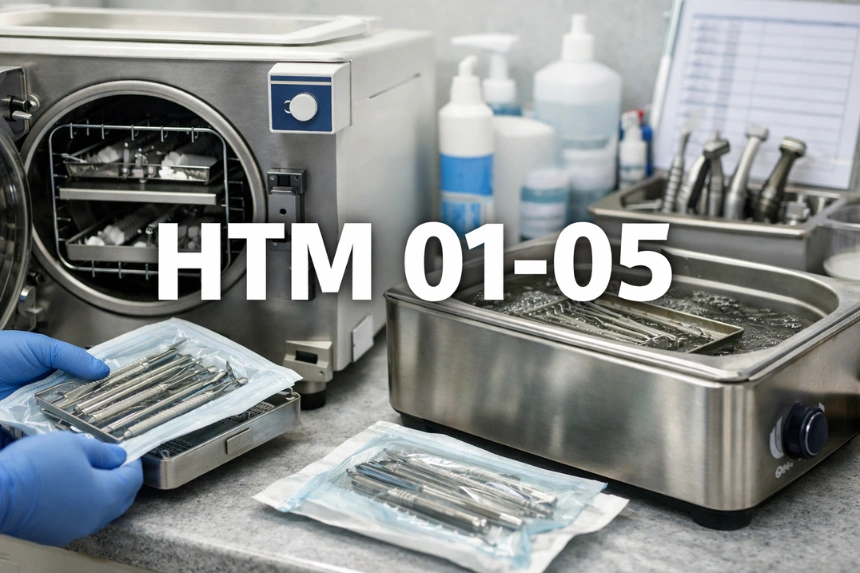
Cleaning removes visible dirt and debris from instruments. HTM 01-05 ultrasonic baths are commonly used for efficient, gentle cleaning. Detergents or enzymatic cleaners designed for dental tools should be used, avoiding manual scrubbing with bare hands. Instruments must be rinsed thoroughly under running water before moving to disinfection.
2. Disinfection
Disinfection reduces microorganisms but does not sterilize instruments. Instruments should be fully immersed in approved chemical disinfectants, following the correct contact time. Staff must wear gloves and protective equipment while handling chemicals.
3. Sterilization
Sterilization kills all remaining microorganisms, usually via steam in an autoclave. Instruments must be dry, packed in sterilization pouches, and regularly monitored with chemical or biological indicators to ensure effectiveness.
4. Storage
Sterilized instruments must be stored in sealed pouches in a clean, dry area. Expiration dates should be checked according to HTM 01-05 updates 2022 to maintain patient safety.
HTM 01-05 Updates 2022
The most recent updates to HTM 01-05 were released in 2022. These updates clarify several points and introduce more practical guidance for dental clinics.
Key changes include:
- Greater emphasis on the correct use of HTM 01-05 ultrasonic baths for cleaning delicate instruments.
- Updated advice on monitoring sterilization cycles with modern autoclaves.
- Guidance on managing single-use instruments versus reusable instruments.
- Strengthened recommendations for staff training and record-keeping.
Dental clinics must follow these updates to remain compliant with regulations and ensure patient safety.
CQC and HTM 01-05 Compliance
The Care Quality Commission (CQC) monitors dental practices in the UK to ensure they meet health and safety standards. Compliance with CQC HTM 01 05 is a critical factor during inspections.
Dental practices show compliance by keeping thorough records of instrument cleaning, sterilization, and autoclave performance, while regularly training staff on HTM 01-05 procedures. Following these steps not only avoids penalties but also reassures patients that hygiene is a top priority.
HTM 01-05 Best Practice Tips for Dental Clinics
To implement HTM 01-05 effectively, dental clinics should follow practical strategies that protect patients and staff.
1. Optimize Ultrasonic Bath Use
Instruments should be fully immersed in the ultrasonic bath without overcrowding. The cleaning solution must be fresh and the device regularly checked and cleaned to ensure optimal performance.
2. Clearly Separate Clean and Dirty Zones
Dirty and clean areas must be strictly separate. Color-coded trays or containers help distinguish instrument stages, and staff should never carry contaminated instruments into clean zones.
3. Implement Regular Staff Training
All staff should be trained in HTM 01-05 procedures, including the correct use of ultrasonic baths and autoclaves. Training should be updated regularly to reflect guideline changes.
4. Keep Accurate Sterilization Records
Autoclave cycles and sterilization results should be logged carefully, including dates, operator details, and indicator results. These records support audits and ensure compliance with CQC standards.
5. Conduct Regular Audits and Inspections
Weekly checks of equipment and decontamination areas help identify issues early. Documenting audits reinforces accountability and ensures consistent adherence to protocols.
6. Inspect Instruments Before Cleaning
Check all instruments for damage before cleaning. Remove any items that cannot be safely sterilized.
7. Use Sterile Packaging Correctly
After sterilization, instruments should remain in properly sealed, labeled packaging and be stored in dry, dust-free cabinets.
8. Maintain and Service Equipment Regularly
Follow manufacturer guidelines to service autoclaves and ultrasonic baths, and replace worn-out parts to maintain sterilization efficiency.
9. Minimize Manual Handling of Instruments
Handle instruments with tongs, trays, or gloves, avoiding direct contact with clean or sterile items to reduce contamination.
Conclusion
Following HTM 01-05 guidelines is essential for every dental clinic. From cleaning and disinfecting to sterilizing and storing instruments, each step is vital to patient safety.
By keeping up with HTM 01 05 updates 2022, using recommended equipment like ultrasonic baths, and following best practice procedures, dental teams can maintain a safe, hygienic, and professional environment. Compliance with CQC HTM 01 05 not only protects patients but also strengthens the reputation of the clinic.
FAQs About HTM 01-05
It is a UK guideline for decontamination of dental instruments to prevent infections and ensure safety.
Yes, dental practices are required to follow the guidance to comply with health regulations.
Ultrasonic baths, autoclaves, chemical disinfectants, and proper storage systems are all recommended by HTM 01 05 dental guidelines.
All reusable instruments must be sterilized after every patient to ensure safety.