Skate, Move, and Make Music with Noiseboard
In today’s world, technology is mixing with everything we do, from the way we play games to the way we listen to music. One of the most interesting examples of this mix is the Noiseboard, a special type of skateboard that can make music through movement.
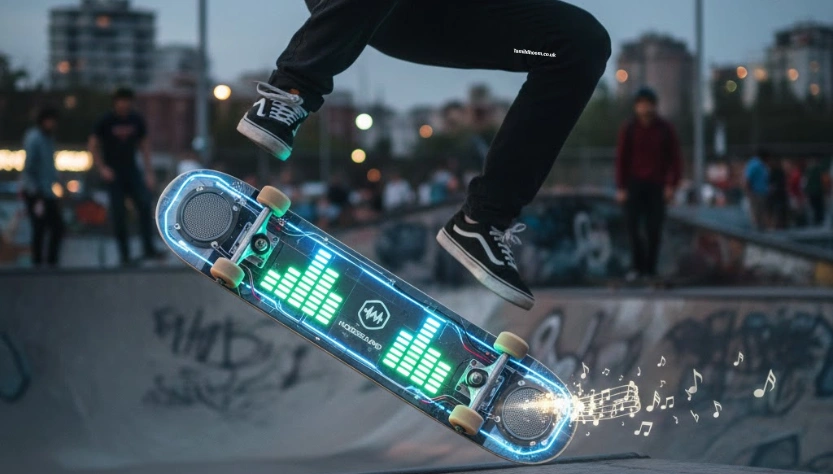
Yes, it may look like a normal skateboard, but it is much more than that. The Noiseboard is a sensor-equipped skateboard built to act like a musical instrument. When a rider moves, jumps, or tilts the board, it turns those actions into sounds and electronic music in real-time.
This article will explain everything you need to know about the Noiseboard, what it is, how it works, who made it, and why it matters. If you want simple, clear, and helpful information, you’re in the right place.
What Is a Noiseboard?
A Noiseboard is a specially designed skateboard that has sensors built inside it. These sensors can detect different movements, such as Bending, Tilting, Speed, Jumps and Pressure.
The board then sends these signals to a computer or sound system. The computer turns these movements into music, beats, or sound effects instantly.
In simple words, a Noiseboard is a skateboard that makes music when you ride it. Created through the Noiseboard Project, it blends skateboarding with digital sound, turning movement into a creative musical performance.
Where Did the Noiseboard Come From?
The Noiseboard was created as part of an experiment to explore new ways of making music through interaction. The goal was to see how simple movements and everyday objects could create sound and inspire creativity.
Researchers and sound designers chose a skateboard because it naturally involves movement. Every tilt, turn, and jump has its own rhythm. By turning these motions into sounds, the skateboard became a new kind of musical instrument that anyone could use.
How Does the Noiseboard Work?
Even though the Noiseboard looks simple on the outside, it contains clever technology inside. Here’s how it works in an easy-to-understand way:
1. Sensors Detect Movement
Inside the Noiseboard are tiny sensors like accelerometers, pressure sensors, motion sensors, and gyroscopes. Together, they track how the board bends, tilts, and moves, capturing every action the rider makes.
2. Signals Travel Wirelessly
Once the sensors detect motion, they send signals wirelessly to a nearby computer, speaker system, or music program.
3. Computer Turns Movement Into Sound
The computer then uses special software to read these signals and instantly transform them into sounds, including beats, electronic music, sound effects, melody patterns, and rhythmic noises that match the rider’s movement.
4. Music Plays in Real-Time
As the skateboarder rides, the music changes instantly. This means the rider becomes a kind of musician, and the board becomes the instrument.
Why Was the Noiseboard Created?
The Noiseboard was created for many reasons, but three stand out:
1. To Explore New Ways of Making Music
Music does not have to come only from instruments like guitars, pianos, or drums. The Noiseboard shows that movement can also be music.
2. To Encourage Creative Expression
Skateboarding is already an expressive sport. The Noiseboard adds a new layer by letting riders express themselves through sound and rhythm.
3. To Blend Art, Technology, and Sports
The Noiseboard project brings together art, science, engineering, sports, and performance, blending them into one creative experience that feels completely new and exciting.
Key Features of the Noiseboard
Here are the most important features that make the Noiseboard special:
Sensor Technology
The embedded sensors are the heart of the system. They track movements accurately and turn them into sound signals.
Wireless Communication
The board does not need cables. It sends data wirelessly to a sound setup.
Real-Time Sound Generation
There is almost no delay. Whatever the rider does, the sound reacts instantly.
Strong and Safe Design
Although it has technology inside, the Noiseboard is strong enough to be used like a normal skateboard.
Artistic Performance Tool
It works well for live performances, events, and music shows where artists want movement-based sound effects.
How People Use the Noiseboard
The Noiseboard is used in different ways by different types of people. Here are the main groups who benefit from it:
1. Musicians
Musicians use the Noiseboard to explore new sounds.They combine riding with electronic music to create unique performances.
2. Skateboarders
Skaters use it to add a creative layer to their tricks. A simple flip or jump becomes a sound effect.
3. Artists and Performers
Performance artists use it in shows and exhibitions. It surprises the audience because the music changes with every movement.
4. Students and Researchers
The Noiseboard is also used in schools, colleges, and labs to explore human-computer interaction, movement-based controls, and creative technology, making it a valuable tool for learning and research.
Benefits of the Noiseboard
The Noiseboard may seem like a fun experiment, but it has real value. Here are some of its key benefits:
1. Encourages Creativity
Riders can invent new tricks that make different sounds. Musicians can create fresh beats by moving physically.
2. Makes Music More Fun
Instead of only pressing buttons or playing instruments, people can move and create music at the same time.
3. Great for Learning
The Noiseboard helps students learn about sensors, sound design, coding, engineering, and motion tracking, offering a hands-on way to explore technology and creativity.
4. Inspires Innovation
It shows how normal objects can become smart tools. This inspires new ideas for future inventions.
Limitations of the Noiseboard
Even though it is exciting, the Noiseboard has a few limitations:
1. Not for Everyday Riders
It is more of a creative tool than a regular skateboard.
2. Requires Technical Knowledge
Setting up a Noiseboard requires software, a wireless system, and sound programs, making it a technically engaging but manageable project.
3. Not Mass-Produced
The Noiseboard is not widely available in the market. It is mostly part of research or special projects.
How the Noiseboard Helps the Future of Music and Technology
Even though the Noiseboard looks simple, its impact can be big. It shows that everyday objects can become musical tools and create sound in new ways. In the future, bikes, shoes, sports gear, or playgrounds could make music through movement. The Noiseboard proves that when creativity and technology come together, many exciting ideas are possible.
Final Thoughts
The Noiseboard is a good example of how technology and creativity can come together to create something completely new. It is not just a skateboard and not just a musical instrument, it is a blend of both.
By turning movement into music, the Noiseboard invites people to think differently, try new ideas, and express themselves in fresh ways. Whether for learning, performing, or inspiring innovation, the Noiseboard shows us that the future of creativity is full of exciting possibilities.
FAQs About Noiseboard
A Noiseboard is a sensor-equipped skateboard that produces music or sound effects based on the rider’s movement.
It uses built-in sensors that track motion and send signals to a computer, which converts the movements into sound.
It was developed under the “Noiseboard Project,” which explores interactive musical interfaces.
No, it is not a mass-market product. It is mostly used for research, performances, and creative projects.
It can generate electronic music, beats, effects, and rhythmic patterns depending on how it is programmed.
Yes, the board is built strong enough for riding, although it is mainly designed for creative use, not for extreme skateboarding.
Musicians, skaters, researchers, and performance artists use it to explore new ways of creating sound.