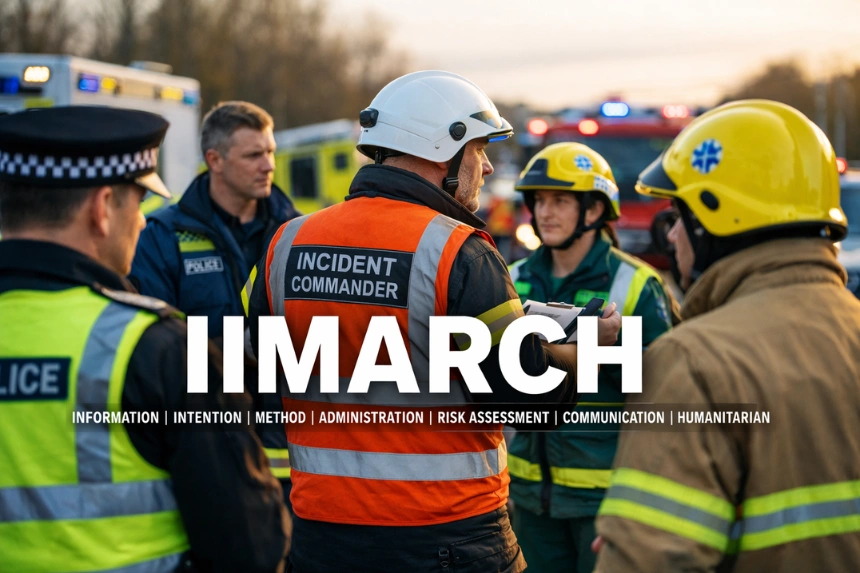
A Guide to IIMARCH: Streamlining Communication in High-Pressure Situations
Introduction
In emergency situations, clear and quick communication can save lives. Police officers, paramedics, firefighters, and other responders must share important information fast and without confusion. One helpful tool used in the UK for this purpose is IIMARCH.
IIMARCH is a simple method that helps emergency teams organize and share key details during an incident. In this article, we will explain what IIMARCH means, how it works, and why it is so important, all in a way that is easy to understand.
What Is IIMARCH?
IIMARCH is a mnemonic. A mnemonic is a word made from the first letters of other words to help people remember information.
Each letter in IIMARCH stands for a different type of information that responders need to share during an emergency. By following this structure, they can make sure nothing important is missed.
What Does IIMARCH Stand For?
Let’s break down each letter in a simple way:
1. I – Information
This is the basic overview of what is happening.
- What is the situation?
- What kind of incident is it?
Example: “There has been a car accident on the highway.”
2. I – Intelligence
This includes any known details that help understand the situation better.
- What caused the incident?
- Are there any risks or threats?
Example: “The road is slippery due to rain, and one vehicle may have lost control.”
3. M – Method
This explains what actions are being taken.
- What are responders doing?
- What is the plan?
Example: “Police are closing the road, and ambulances are on the way.”
4. A – Actions
This focuses on what has already been done.
- What steps have been completed so far?
Example: “Two injured people have been taken to the hospital.”
5. R – Risks
This highlights any dangers that still exist.
- Are there ongoing threats?
- Is the area still unsafe?
Example: “Fuel is leaking from one vehicle, which could cause a fire.”
6. C – Contingencies
This means backup plans.
- What will happen if things change?
- What is the next step if the situation gets worse?
Example: “Firefighters are ready in case the fuel ignites.”
7. H – Humanitarian
This focuses on people and their needs.
- Are people safe?
- Do they need help, shelter, or medical care?
Example: “Nearby drivers are being guided away to keep them safe.”
Why Is IIMARCH Important?
IIMARCH is essential because it brings structure and clarity to communication, especially in high-pressure situations. By following a consistent format, responders can quickly understand the situation without confusion.
This saves valuable time, reduces the risk of missing critical details, and supports better decision-making. Most importantly, it improves teamwork by ensuring that all agencies and team members are aligned and working with the same clear information.
Where Is IIMARCH Used?
IIMARCH is mainly used across emergency services in the UK, including police officers, firefighters, ambulance teams, and emergency control rooms. It helps them share clear and structured information during operations.
It is commonly used during live incidents, where quick updates are needed, and in radio communication, where messages must be short and easy to understand. Teams also use IIMARCH in briefings to explain situations clearly and in training exercises to practice strong communication skills.
Overall, it ensures that important information is shared quickly, clearly, and without confusion.
Simple Example of IIMARCH in Action
Let’s look at a short and simple example of how IIMARCH might be used:
Information: There is a fire in a small apartment building.
Intelligence: The fire started in the kitchen on the second floor.
Method: Firefighters are entering the building to control the fire.
Actions: Residents have been evacuated safely.
Risks: Smoke is spreading quickly to nearby rooms.
Contingencies: Extra fire crews are on standby if needed.
Humanitarian: One resident is being treated for smoke inhalation.
This structured approach makes it easy for everyone to understand what is happening.
Example: How IIMARCH Helps in Real Life
Imagine there is a serious road accident at a busy intersection. Cars are damaged, people are injured, and traffic is building up. Many responders arrive at the same time.
Instead of everyone speaking randomly, one officer uses IIMARCH to give a clear update:
They first explain what is happening and where, so everyone understands the situation right away. Then, they clearly state what needs to be done, like moving students to a safe area. After that, they explain how this will happen, who will guide students, who will check classrooms, and who will control entry points.
They also mention what resources are available, such as staff members, safety equipment, and support from emergency services. Next, they highlight any dangers, like the risk of gas exposure, so everyone stays cautious.
They make sure everyone knows how updates will be shared, so no one is left confused. Finally, they focus on people, checking if any students feel unwell or need immediate help.
Because the message is clear, structured, and complete, everyone understands their role without needing repeated instructions. The evacuation happens quickly, safely, and with less stress.
Tips for Using IIMARCH Effectively
Here are some practical, real-world tips you can use:
1. Stay Calm Under Pressure
In stressful moments, people often speak too fast or forget key details. Pause for a second, take a breath, and then speak. A calm voice helps others understand you better and builds trust.
2. Think in Sections, Not All at Once
Instead of trying to say everything together, break your message into parts using IIMARCH. This keeps your thoughts organized and prevents you from missing important information.
3. Start with the Most Important Information
Always begin with what matters most (the situation or risk). This helps listeners quickly understand what is happening and why it matters.
4. Keep Messages Short and Focused
Avoid long explanations. Say only what is necessary. Short, clear sentences are easier to understand, especially over radio or in noisy environments.
5. Use Simple and Direct Language
Avoid complicated words, jargon, or unclear phrases. Use plain language so that anyone listening can understand immediately.
6. Double-Check Key Details
Before sharing information, quickly confirm important facts like location, number of people involved, or risks. Small mistakes can lead to confusion or delays.
7. Update Information Regularly
Situations can change quickly. Keep others informed by giving short updates when something new happens, even if it seems minor.
8. Highlight Risks Clearly
Always mention any danger or safety concern. This helps others prepare and respond safely.
Can IIMARCH Be Used Outside Emergencies?
Yes! While IIMARCH is designed for emergencies, the idea of structured communication can be useful in everyday life.
For example:
You can use it when giving instructions, explaining a problem, or reporting an issue at school or work. By organizing your thoughts in a logical order, you help others understand you quickly and respond more efficiently.
Conclusion
IIMARCH is a simple but powerful tool that helps emergency responders share information clearly and quickly. By breaking information into easy steps, Information, Intelligence, Method, Actions, Risks, Contingencies, and Humanitarian, it ensures nothing important is missed.
Even though it is mainly used by professionals in the UK, the basic idea can help anyone communicate better, especially in stressful situations.
Clear communication saves time, reduces mistakes, and most importantly, can save lives. That is why tools like IIMARCH are so valuable.