Guide to Belting Tools for Conveyor Belt Maintenance
Introduction
Belting tools are specialized instruments used to cut, prepare, and splice conveyor belts accurately. They ensure strong, durable splices and support various methods like mechanical, vulcanized, and thermoplastic splicing, enhancing conveyor system reliability and efficiency.
What Are Belting Tools?
Belting tools are the specialized tools used by technicians to work on conveyor belts. Their main purpose is to control the conditions required to create a strong belt splice. These conditions include accurate cutting, proper alignment, correct surface preparation, and controlled bonding during the joining process.
The Three Main Conveyor Belt Splice Methods
Different types of conveyor belts require different splicing methods. The tools used during maintenance often depend on the splice technique selected. In most industrial operations, technicians work with three common splice methods.
1. Mechanical Fasteners
Mechanical fasteners are one of the fastest ways to join conveyor belt ends. This method uses metal plates, rivets, staples, or screws to connect the belt sections. Mechanical splicing is popular because it allows belts to be replaced quickly without dismantling large parts of the conveyor system.
2. Hot Vulcanized Splicing
Hot vulcanization is considered the strongest and most permanent splicing method for rubber conveyor belts. In this process, the belt ends are joined using heat, pressure, and rubber bonding materials. The heat causes the rubber compounds to bond together, creating a joint that behaves almost like the original belt.
Typical vulcanizing temperatures are around 150 to 155 degrees Celsius. The curing time depends on the thickness and type of belt being used. Because this process requires controlled heat and pressure, technicians use specialized vulcanizing presses to complete the splice.
Hot vulcanized splices are widely used in heavy-duty applications such as mining and bulk material handling, where strong and durable belt joints are necessary.
3. Thermoplastic Hot Press Splicing
Thermoplastic splicing is commonly used for lightweight belts made from materials such as PVC and polyurethane. These belts are often found in packaging systems, distribution centers, and food processing plants.
In this method, belt ends are joined using heated press machines that apply both pressure and temperature in a controlled cycle. Many modern thermoplastic presses operate with preset programs that automatically control heating and cooling. This makes the process more repeatable and reduces the chances of operator error.
Hand Tools Used in Conveyor Belt Work
Hand tools are often the first tools used during belt preparation. Even when powered machines are available, technicians still rely on hand tools for precision work.
1. Layout and Squaring Tools
Correct alignment begins with accurate layout. Technicians first establish a centerline along the belt. After this, they draw a perpendicular line across the width of the belt to mark the cutting location.
2. Cutting and Trimming Tools
Cutting tools are used to shape belt ends and prepare them for splicing. Industrial utility knives are commonly used to trim rubber covers, cut fabric layers, and shape the steps required in vulcanized splices.
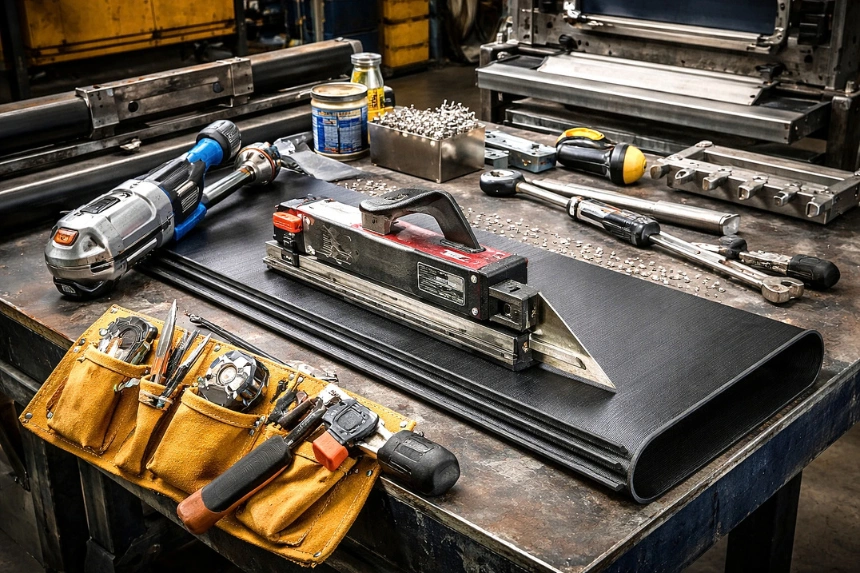
Sharp blades are extremely important because dull blades can damage belt layers or create uneven cuts. Many technicians carry these small cutting tools in their belt with tools during maintenance work.
3. Rollers for Bonding
Rollers are used during splicing to press bonding materials into place. These rollers help remove trapped air pockets and ensure that adhesives or rubber compounds spread evenly across the splice area.
When bonding materials are applied correctly and pressed with rollers, the final splice becomes stronger and more reliable.
3. Edge Finishing Tools
Edge finishing tools help shape the edges of conveyor belts, particularly during mechanical fastener installation. Tools such as belt nippers or chamfer devices allow technicians to trim corners and remove excess material.
Measuring and Process-Control Instruments
Accurate measurement plays an important role in conveyor belt maintenance. Without correct measurements, it is difficult to choose the right tools or achieve proper belt alignment.
1. Thickness Gauges
Thickness gauges measure the exact thickness of the conveyor belt. This measurement helps technicians determine the correct fastener size, cutter capacity, and skiving depth required for the job.
2. Tension and Elongation Measurement
Correct belt tension is important when installing or commissioning a conveyor belt. Lightweight conveyor belts, especially those used in packaging or logistics systems, are often installed with a small amount of elongation.
In many cases, recommended elongation during installation ranges between about (1.2 -1)%. During the initial startup of the conveyor, technicians run the system with minimal tension and gradually adjust it until the belt carries its load smoothly.
Belt Cutters
Belt cutters are specialized tools designed to cut conveyor belts cleanly and safely. Because conveyor belts can be thick and reinforced with fabric or steel cords, ordinary cutting tools are often not suitable.
1. Manual Belt Cutters
Manual belt cutters usually consist of a clamping system and a guided blade. The clamp holds the belt firmly in place while the blade moves through the material along a straight path.
2. Powered Belt Cutters
Powered belt cutters use electric motors and circular blades to cut through conveyor belts. These machines can make straight and consistent cuts much faster than manual methods.
Operators must always check that blade guards are functioning correctly and disconnect the power supply before performing maintenance or blade replacement.
3. Belt Skivers
Skiving tools are used to remove controlled layers of material from the conveyor belt surface. This process prepares the belt for certain types of splices.
Skiving may involve removing rubber covers or shaping belt ends into wedge forms. These shapes help bonding materials attach properly during vulcanization or adhesive bonding.
Mechanical Fastener Installation Tools
When mechanical fasteners are used, technicians rely on installation tools designed for specific fastener systems. These tools help position the fastener plates correctly and drive staples or rivets through the belt.
After installation, technicians inspect the splice carefully. They check that fasteners are fully set, plates are compressed tightly, and the hinge pin moves smoothly through the loops. A properly installed mechanical splice should sit parallel to the belt edge and operate smoothly over conveyor pulleys.
Vulcanizing Equipment and Hydraulic Presses
Hot vulcanized splicing requires equipment capable of applying both heat and pressure to the belt splice. This is done using a vulcanizing press.
The press typically consists of heated plates that clamp the belt splice area. During operation, the press applies pressure evenly across the joint while the temperature rises to the required curing level. For many rubber conveyor belts, the curing temperature is around 150 to 155 degrees Celsius.
Once the curing time is complete, the splice must cool while pressure is maintained. Only after the temperature drops to a safe level can the press be opened and the belt released.
Typical Conveyor Belt Installation Workflow
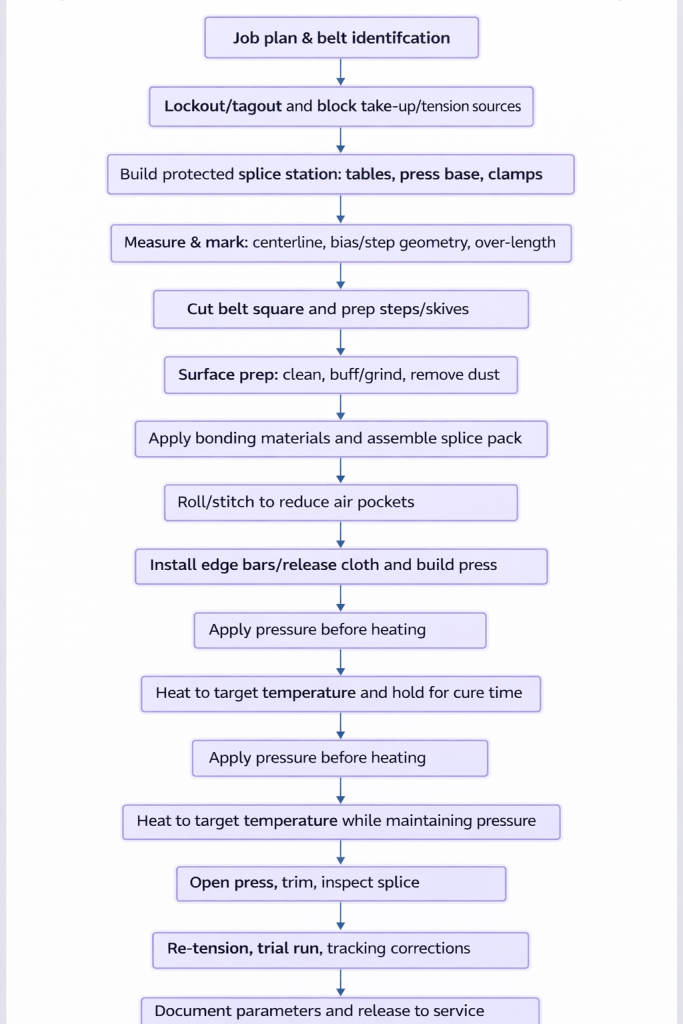
Belting tools are used throughout the conveyor belt installation process. The first step is securing the conveyor system by locking out all power sources and controlling tension devices such as take-up systems. This prevents unexpected movement while technicians are working.
Next, the belt is carefully fed through the conveyor structure. Technicians avoid twisting or creasing the belt during this stage because such damage can weaken the material.
After positioning the belt, the technicians mark the cutting lines using layout tools and cut the belt to the required length. The belt surfaces are then prepared by grinding, skiving, or cleaning depending on the splice method.
Once the splice is completed, the belt is re-tensioned and the conveyor is started slowly. Technicians observe the belt’s tracking and adjust the tension until the system runs smoothly under load.
Conclusion
Belting tools play an important role in maintaining conveyor systems. These tools allow technicians to cut belts accurately, prepare surfaces properly, and create reliable splices. From simple hand tools to advanced vulcanizing presses, each tool supports a specific step in the conveyor belt maintenance process.
When technicians select the correct belting tools and follow proper procedures, they can produce strong and durable belt splices that reduce downtime and extend the life of conveyor systems. In modern industrial environments, investing in the right belting tools is not only about equipment but also about safety, efficiency, and long-term reliability.
Frequently Asked Questions
Place the belt on a firm surface like a wooden block. Choose the punch size that matches the existing holes. Position the tool where you want the new hole and squeeze the handles or strike the punch with a hammer to cut through the belt.
Wear the tool belt around your hips, not your stomach, and adjust it so it fits snugly. Keep heavier tools close to your body and balance the weight on both sides to reduce strain.
You do not always need one, but it helps. A serpentine belt tool makes it easier to move the belt tensioner in tight engine spaces when removing or installing the belt.
Place the belt on wood and push a sharp nail or heated metal tip through the leather to create a hole. Try to match the size of the existing holes for the best fit.