
How to Stop Washing Machine Smelling: A Step-by-Step Guide
Introduction
A washing machine that smells isn’t just unpleasant, it signals hidden buildup of moisture, detergent, and grime that fosters bacteria and mold. This guide offers simple, effective steps to eliminate odors and keep both front-load and top-load washers fresh, ensuring your laundry stays clean and your machine runs smoothly.
Why Washing Machines Develop Odors
Odors generally arise from stagnant moisture combined with detergent or soil residue. Over time, this environment promotes bacterial growth and, in damp conditions, mold and mildew.
Front-load washers tend to be more prone to odors due to:
Gasket folds that trap water: The door seal is designed to prevent leaks but inadvertently traps moisture and debris in its folds.
Clogged drain pump filters: These filters can prevent proper drainage, leaving water lingering in the system.
High-efficiency design: Using less water can leave residues that accumulate, especially when detergents are overdosed or cold washes are frequent.
Top-load washers can develop odors as well, typically because:
Lid closure traps humidity: Preventing the tub from drying between cycles.
Residue accumulation: Detergent and softener deposits can collect in drawers or under the rim.
Agitator areas: Some models have hidden crevices where lint and moisture accumulate.
Step-by-Step Cleaning Procedure
The most reliable approach aligns with manufacturer recommendations: clean all accessible components, then run the washer’s self-clean or tub-clean cycle.
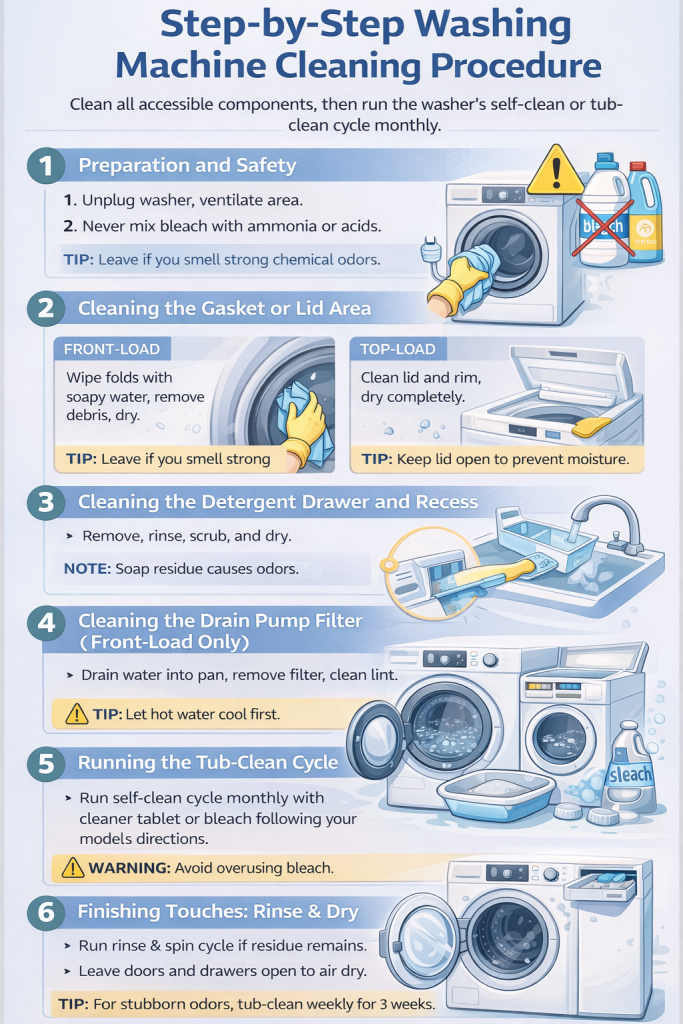
1. Preparation and Safety
Spend about five minutes on these essential precautions at minimal cost ($0–$2). Ensure the area is well-ventilated, unplug the washer before accessing any filters or panels, and never mix bleach with ammonia or acids to prevent toxic fumes. If strong chemical odors occur, leave the area immediately and seek fresh air.
2. Cleaning the Gasket or Lid Area
Spend 10–15 minutes.
Front-load: wipe gasket folds with warm, soapy water, remove debris, dry thoroughly; use diluted bleach for mold if needed.
Top-load: clean lid and rim, dry completely, and keep lid open to prevent moisture.
3. Cleaning the Detergent Drawer and Recess
Allocate 10–20 minutes at minimal cost. Detergent residue is a common cause of recurring odors. Remove the drawer, rinse with warm water, and scrub gently with a soft brush. Ensure both the drawer and its cavity are completely dry before reinstalling.
4. Cleaning the Drain Pump Filter (Front-Load Only)
This takes about 15–30 minutes and costs very little. A clogged filter can cause water to sit and create odors. Place towels and a shallow container under the filter panel, drain any leftover water using the emergency hose if available, then remove the filter. Clean out lint and debris, check the impeller, and put the filter back. Let any hot water cool before draining if the washer was recently used.
5. Running the Tub-Clean Cycle
Hands-on time is about 5 minutes, with the cycle taking 1-4 hours. Cost ranges from $0.50 to $4 depending on the cleaner. Manufacturers recommend doing this monthly.
Use a washer cleaner tablet or pouch in an empty tub, or follow your model’s instructions for bleach in the bleach compartment.
Tip: Some models require up to four hours for a complete front-load tub-clean cycle.
6. Finishing Touches: Rinse and Dry
Spend 2–5 minutes. If any residue remains, run an extra rinse and spin cycle. Keep doors, lids, and drawers open to let the washer dry completely. For stubborn odors, repeat the tub-clean cycle once a week for three weeks.
Cleaning Options and Their Effectiveness
| Method | Materials | Time | Cost | Effectiveness |
|---|---|---|---|---|
| Washer cleaner tablet + Clean Washer | Commercial cleaner | 5 min + 1–4 hr | $2–$4 | High |
| Bleach-based Clean Washer | Liquid bleach | 5 min + 1–4 hr | $0.50–$1 | High |
| Gasket cleaning | Soap/water, optional bleach | 10–15 min | $0–$1 | Very high |
| Drawer + recess cleaning | Water + brush | 10–20 min | $0 | Medium–High |
| Drain pump filter | Towels + brush + pan | 15–30 min | $0 | High |
| Descaling (if needed) | Citric acid / washer-safe descaler | 5 min + cycle | $0.50-$2 | Medium |
Note: Vinegar and baking soda should be used separately. Combining them neutralizes cleaning efficacy.
Maintenance Habits to Prevent Odors
An effective prevention strategy focuses on reducing moisture and residue:
- Leave doors, lids, and detergent drawers open after use.
- Wipe gaskets (front-load) or lid/rim (top-load) weekly.
- Use the correct detergent type and dose.
- Run a monthly tub-clean cycle.
- Clean the pump filter monthly (front-load) or every 40 washes for top-loads.
Troubleshooting Persistent Smells
1. Musty or mildew odor
Musty or mildew smells usually come from damp gaskets, leftover detergent in drawers, overdosing detergent, or clogged pump filters. To fix it, run the tub-clean cycle again, wipe down the gaskets and drawers, and leave the washer doors open overnight to dry completely.
2. Sewage or sulfur odor
These smells usually point to drainage problems, not just a dirty tub. Check hoses for kinks or blockages and make sure water drains completely. If the odor persists near the drain, consider calling a plumber.
3. Heavy mold growth
If you notice significant mold growth, professional help may be needed. Use disinfectants carefully and follow all safety instructions.
Conclusion
Persistent washing machine odors are not inevitable. By targeting key hotspots, gaskets, detergent drawers, pump filters, and tub residue, and establishing a regular maintenance routine, both front-load and top-load washers can remain clean and odor-free. Proper ventilation, correct detergent use, and adherence to manufacturer-recommended self-clean cycles are essential for preventing biofilm, mold, and mildew buildup.
Frequently Asked Questions
Persistent odors usually come from hidden moisture in gaskets, detergent drawers, or a clogged drain pump filter. Running the tub-clean cycle multiple times and thoroughly drying all parts often resolves the issue.
Yes. Front-load washers trap moisture in the door gasket and use less water overall, which can leave detergent residue and soil behind, creating an ideal environment for bacteria and mildew.
For best results, run a tub-clean or self-clean cycle once a month, wipe gaskets and detergent drawers weekly, and clean the drain pump filter monthly (front-load) or every 40 washes (top-load).
Yes, but follow manufacturer instructions carefully. Use the recommended amount in the bleach compartment and never mix bleach with ammonia or acids, as this can create toxic fumes.
Absolutely. Leaving doors and drawers open after each wash allows the tub and detergent areas to dry completely, preventing mold, mildew, and unpleasant odors.
This usually indicates a drainage problem rather than a dirty tub. Inspect hoses and the drain for blockages or kinks, and consult a plumber if the odor persists.
Vinegar can help dissolve mineral buildup, and baking soda can neutralize odors, but never mix them together, as this cancels out their cleaning power. Use them separately if desired.
If heavy mold growth persists, repeated cleaning fails, or sewage-like odors continue after checking drains, it’s time to consult a professional to prevent damage and health risks.