P.I.E.S in Health and Social Care
Introduction
In health and social care, looking after someone’s health is not just about treating illness. It is about helping the whole person live a happy, safe, and meaningful life. This is where P.I.E.S comes in.
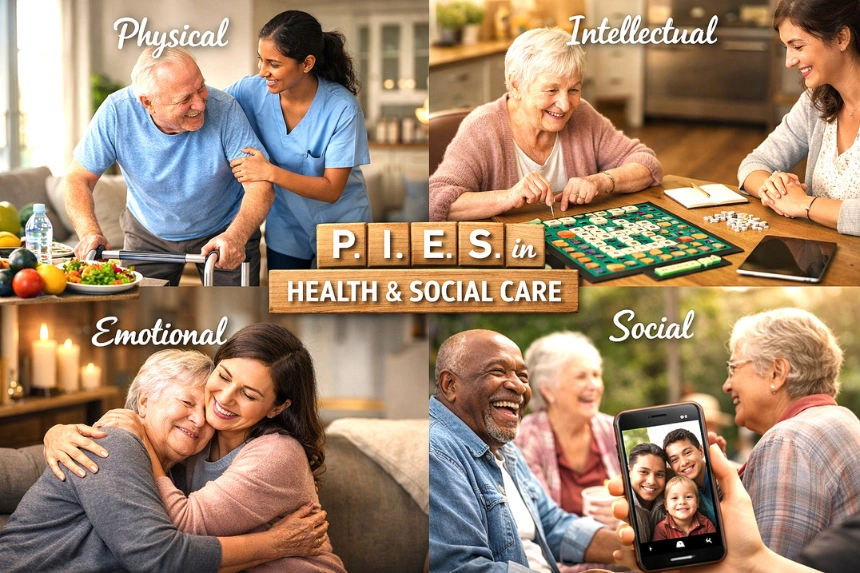
P.I.E.S stands for:
- Physical
- Intellectual
- Emotional
- Social
This model helps care workers understand that every person has different needs, and all of these areas are connected. If one area is not supported, it can affect the others. In this article, you will learn what each part of P.I.E.S means, why it is important, and how it is used in real life.
What is P.I.E.S in Health and Social Care?
P.I.E.S is a way to look at a person’s overall wellbeing. Instead of focusing only on physical health (like illness or injury), it looks at four important areas of life.
The main idea behind P.I.E.S. is holistic care, which means caring for the whole person, not just one part of them.
For example:
- A person may be physically healthy but feel lonely (social need).
- Someone may have emotional stress that affects their body (physical need).
By using P.I.E.S, care providers can give person-centered care, which means care that is designed around the individual’s unique needs and preferences.
Why is P.I.E.S. important?
P.I.E.S is important because it helps improve a person’s quality of life. It ensures that no part of a person’s wellbeing is ignored.
Key Benefits:
- Helps people stay independent
- Improves mental and physical health
- Builds stronger relationships
- Reduces loneliness and stress
- Supports overall happiness and well-being.
When all four areas are supported, people feel more balanced and cared for.
The Four Areas of P.I.E.S Explained
1. Physical Needs
Physical needs are about the body and how it functions. This includes staying healthy, active, and safe.
Examples of Physical Needs:
- Eating healthy food
- Drinking enough water
- Getting regular exercise
- Sleeping well
- Taking medication correctly
- Personal hygiene (bathing, brushing teeth)
Why Intellectual Needs Matter:
If physical health is poor, it can affect other areas. For example, someone who is always tired may feel emotional stress or stop socializing.
Ways to Support Physical Needs
To support physical wellbeing, ensure a person has balanced meals and encourage regular movement like walking or light exercise. Provide respectful help with personal care if needed, and make sure they attend regular health check-ups to stay healthy.
2. Intellectual Needs
Intellectual needs are about the mind and learning. It includes thinking, understanding, and gaining new knowledge.
Examples of Intellectual Needs:
- Learning new skills
- Reading books
- Solving puzzles
- Having meaningful conversations
- Education and training
Why Intellectual Needs Matter:
Keeping the mind active helps improve memory, confidence, and independence. It can also reduce boredom and frustration.
Simple Ways to Support Intellectual Needs:
To support intellectual needs, encourage hobbies like reading or drawing and provide games or puzzles to keep the mind active. Support learning through skill-building activities, and ask questions while listening to ideas to help the person feel valued and engaged.
3. Emotional Needs
Emotional needs are about feelings and mental wellbeing. Everyone needs to feel safe, valued, and understood.
Examples of Emotional Needs:
- Feeling loved and cared for
- Having someone to talk to
- Managing stress and anxiety
- Building self-confidence
- Feeling respected
Why Emotional Needs Matter:
If emotional needs are not met, a person may feel sad, anxious, or even depressed. This can also affect their physical health.
Simple Ways to Support Emotional Needs:
To support emotional wellbeing, listen carefully and show empathy. Offer kindness and reassurance, encourage open expression of feelings, and create a calm, safe environment where the person feels supported.
4. Social Needs
Social needs are about relationships and connecting with others.
Examples of Social Needs:
- Spending time with family and friends
- Joining groups or community activities
- Communicating with others
- Feeling included
Why Social Needs Matter:
Humans are social beings. Without social interaction, people may feel lonely or isolated, which can harm both mental and physical health.
Simple Ways to Support Social Needs:
To support social wellbeing, encourage participation in social activities and help maintain relationships with family and friends. Support involvement in community events, and use phone or video calls to help them stay connected when in-person contact is not possible.
How the Four Areas are Connected
One of the most important things about P.I.E.S is that all four areas are linked together.
Example:
- If someone is physically unwell, they may feel emotionally low.
- If a person feels lonely (social), they may lose interest in learning (intellectual).
- Stress (emotional) can lead to poor sleep (physical).
This is why care must support all areas together, not just one.
Using P.I.E.S in Real-Life Care
1. Hospitals
Doctors and nurses go beyond treating illness by supporting emotional wellbeing, encouraging family visits for social support, and providing clear information to help patients understand their condition.
2. Care Homes
Care workers apply the P.I.E.S approach daily by promoting physical activity, facilitating group engagement, actively listening to residents, and supporting independence to enhance overall wellbeing.
3. Home Care
Home care providers support clients by assisting with daily tasks, offering companionship, and encouraging hobbies to address physical, emotional, social, and intellectual needs.
Person-Centred Care and P.I.E.S
P.I.E.S is a key part of person-centred care. This means putting the individual at the center of all decisions.
What Person-Centred Care Looks Like:
- Respecting personal choices
- Understanding individual needs
- Treating each person with dignity
- Supporting independence
For example, two people may have the same illness, but their P.I.E.S needs may be very different. One may need more social support, while the other may need emotional support.
Challenges in Meeting P.I.E.S Needs
Meeting P.I.E.S needs in health and social care is not without its difficulties. Care workers often face several practical challenges that can make providing holistic care complex.
1. Time Constraints
Care workers frequently manage multiple residents or clients at once, making it difficult to address every aspect of an individual’s wellbeing fully. Limited time can affect the quality and consistency of care.
2. Limited Resources
A lack of sufficient staff, equipment, or activity materials can hinder the delivery of comprehensive support across physical, intellectual, emotional, and social areas.
3. Communication Barriers
Language differences, hearing difficulties, or cognitive impairments can make it challenging for individuals to express their needs and for care workers to understand them accurately.
4. Cultural Differences and Personal Preferences
Every individual has unique cultural values and personal preferences. Providing care that respects these differences requires careful attention and adaptability, which can be complex to implement consistently.
How to Overcome These Challenges:
Overcoming these challenges requires practical strategies: clear and open communication, detailed care planning, ongoing staff training, actively listening to individuals, and fostering team collaboration. By addressing these obstacles thoughtfully, care providers can ensure that physical, intellectual, emotional, and social needs are met effectively, enhancing quality of life for those they support.
Tips for Applying P.I.E.S in Everyday Life
Even outside professional care, P.I.E.S can help anyone improve wellbeing. Simple daily habits make a big difference.
1. Physical Wellbeing
Eating nutritious meals, staying active through walking or light exercise, and getting enough sleep all support physical health.
2. Intellectual Wellbeing
Keeping the mind active by reading, solving puzzles, or learning new skills encourages growth and curiosity.
3. Emotional Wellbeing
Talking about feelings, practicing relaxation, and taking time for self-care help maintain emotional balance.
4. Social Wellbeing
Staying in touch with family and friends, joining community activities, and engaging with others reduce loneliness and build connections.
Conclusion
P.I.E.S in health and social care is a powerful and simple way to understand what people truly need. By focusing on Physical, Intellectual, Emotional, and Social wellbeing, care providers can support the whole person, not just their illness.
This approach promotes better health, greater independence, stronger relationships, and an overall higher quality of life. Ultimately, P.I.E.S reminds us that true care goes beyond treating the body, it means supporting the whole person.