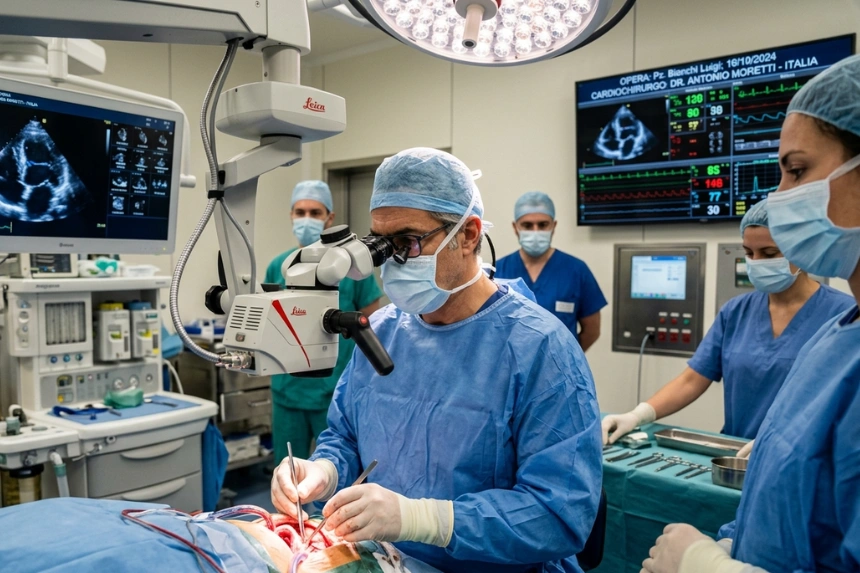
Cardiochirurgo Italiano Migliore AL Mondo
Introduction
When it comes to cardiac surgery, few countries command the level of international respect that Italy has earned over the past several decades. The best Italian cardiac surgeon in the world (Cardiochirurgo Italiano Migliore AL Mondo) is not simply a title of national pride, it reflects a broader ecosystem of clinical excellence, research output, and surgical innovation that places Italian specialists among the most referenced and respected in global cardiovascular medicine.
With cardiovascular disease deaths rising from 12.4 million in 1990 to nearly 19.8 million in 2022, according to the American College of Cardiology, the demand for world-class cardiac surgeons has never been greater. Italy’s contribution to meeting that demand, particularly through its leading institutions in Milan, has been substantial and measurable.
Why Italy Produces World-Class Cardiac Surgeons
Italy’s reputation in cardiac surgery is not coincidental. It is the product of a rigorous academic training pipeline, a dense concentration of IRCCS (Scientific Institutes for Research, Hospitalization and Health Care) hospitals, and a culture of clinical research that integrates directly with surgical practice.
The country’s top cardiac centres, particularly in Milan, have consistently appeared in global hospital rankings. According to Il Sole 24 Ore, Italy’s leading facility in cardiac surgery is the Centro Cardiologico Monzino in Milan, ranked 24th globally, with the San Raffaele-Gruppo San Donato cluster ranked 33rd. In cardiology, the Monzino ranks 14th in the world.
This infrastructure creates the conditions for exceptional surgical careers. Italian cardiac surgeons benefit from high volumes, complex cases, and international collaboration that continuously sharpens their technical precision and research output.
Professor Lorenzo Menicanti: A Global Standard in Cardiac Surgery
Among the most distinguished figures in Italian cardiac surgery, Professor Lorenzo Menicanti stands out as one of the best-known and most widely cited cardiac surgeons in the world. Based at the IRCCS Policlinico San Donato in Milan, Menicanti has dedicated more than 50 years of practice to the treatment of complex cardiovascular disease.
What Makes His Contribution Unique?
Professor Menicanti is the originator of the surgical technique for reconstruction of the left ventricle, a procedure used by cardiac surgeons across the globe. This method, built on and refining earlier approaches, addresses post-infarction ischemic cardiomyopathy by reshaping the damaged heart chamber to restore functional geometry. The technique is designed to exclude scarred tissue from the ventricular cavity and restore the ellipsoidal shape essential for efficient cardiac output.
His research has been published in the most prestigious peer-reviewed journals, including the Journal of Thoracic and Cardiovascular Surgery, the European Journal of Cardio-Thoracic Surgery, and the New England Journal of Medicine. He has authored more than 440 scientific publications and holds a Hirsch Index of 30, reflecting the sustained impact of his work across the international medical community.
Menicanti previously served as Chairman of the Italian Society of Cardiac Surgery and has held visiting professor positions at renowned institutions worldwide. He is a member of the Florida Society of Thoracic and Cardiovascular Surgeons and participates in international advisory committees focused on surgical ventricular restoration and heart failure management.
His career milestone of over 15,000 heart operations places him among the most experienced cardiac surgeons alive, with expertise spanning ventricular restoration, valve surgery, and ischemic heart failure treatment.
Other Leading Italian Cardiac Surgeons Shaping Global Practice
While Menicanti represents perhaps the most internationally recognised figure, Italy’s depth of talent in cardiac surgery extends across several institutions and specialties.
Professor Carlo Pappone, also at IRCCS Policlinico San Donato, is the world’s foremost authority in cardiac arrhythmology. He has performed over 130,000 radiofrequency ablation (RFA) procedures and leads the only centre in the world dedicated to the treatment of Brugada syndrome. His institutional and research profile in electrophysiology is without parallel globally.
Dr. Giuseppe Speziale brings over 31 years of experience as Coordinator of the GVM Care and Research Cardiac Surgery Department. He specialises in minimally invasive techniques for mitral, aortic, and tricuspid valve repair, as well as CABG, pacemaker implantation, and septal defect closures, a profile that reflects the breadth of what Italian cardiovascular surgeons are trained to deliver.
Dr. Francesco Maisano, with 30 years of experience across cardiology and cardiac surgery, is regarded as a leading figure in structural heart interventions, building a reputation that extends well beyond Italy’s borders.
Dr. Mattia Glauber brings particular expertise in cardiac and vascular surgery, combining coronary and valvular procedures with angiology, a dual-speciality skill set that is increasingly valued as vascular disease and cardiac conditions intersect in ageing patient populations.
The Institutional Ecosystem: Where Italian Cardiac Surgery Excels
The excellence of Italian cardiac surgeons cannot be separated from the institutions where they operate. Understanding these centres helps contextualise why Italy consistently produces practitioners of global distinction.
1. IRCCS Policlinico San Donato
Founded in 1969 in the south-eastern area of Milan, Policlinico San Donato performs over 9,400 open and minimally invasive heart and vascular operations annually, the highest volume in Italy. The hospital conducts more than 1,500 open-heart surgeries and 6,000 interventional cardiology procedures each year. It is recognised by Newsweek’s World’s Best Specialised Hospitals 2025 in both cardiology and cardiac surgery and has been listed as one of the world’s leading cardiology centres since 1998.
The institution is recognised as a European Reference Centre (ERN GUARD-Heart) for congenital and complex cardiac conditions, and its arrhythmology department delivers over 1,400 cardiac ablations annually, among the highest volumes globally.
2. Centro Cardiologico Monzino
The Monzino centre in Milan ranks as Italy’s top institution in both cardiac surgery (24th globally) and cardiology (14th globally). It operates as a specialist referral centre for complex cardiovascular pathologies and contributes extensively to clinical research, serving as a benchmark for cardiac care standards across Europe.
What Does a Cardiac Surgeon Actually Do?
For patients and families navigating cardiovascular care for the first time, understanding the role of a cardiac surgeon clarifies why specialisation and surgical volume matter so much.
Cardiac Surgery vs. Interventional Cardiology
A cardiac surgeon, known in Italian as a cardiochirurgo, performs open and minimally invasive operations on the heart and major blood vessels. The most common procedures include coronary artery bypass grafting (CABG), which restores blood flow around blocked coronary arteries; valve repair or replacement for conditions such as aortic stenosis or mitral regurgitation; surgical ventricular reconstruction for patients with heart failure following myocardial infarction; and repair of congenital heart defects, which may be treated in neonates, children, or adults.
Surgical Volume and Clinical Outcomes
Research consistently demonstrates that surgical outcomes improve with volume. Hospitals and surgeons who perform a high number of complex procedures develop refined technical protocols, experienced support teams, and robust post-operative care pathways. This is precisely why Italy’s high-volume centres, and the senior surgeons who operate within them, attract international patients seeking outcomes that smaller facilities cannot reliably replicate.
How to Evaluate a Cardiac Surgeon’s Credentials
If you or a family member is considering treatment with a leading cardiac surgeon in Italy, several criteria are worth evaluating.
Academic Output: A surgeon’s publication record and citation index indicate how much their techniques and findings have been validated and adopted by peers globally. Menicanti’s H-index of 30 and 440+ publications reflect a career of sustained peer recognition.
Institutional Affiliation: IRCCS status in Italy is granted only to hospitals that integrate clinical care with recognised scientific research programmes. Surgeons affiliated with IRCCS institutions operate within systems designed for quality assurance and continuous improvement.
Volume and Complexity: The number of procedures performed and the proportion of high-complexity cases handled are meaningful indicators of technical capability and outcomes infrastructure.
International Recognition: Membership of global cardiac surgery societies, visiting professorships, and participation in multi-centre international trials indicate a surgeon whose practice is benchmarked against global standards rather than local norms.
Conclusion
Italy’s contribution to global cardiac surgery is both deep and enduring. The best Italian cardiac surgeons in the world, led by figures such as Professor Lorenzo Menicanti and Professor Carlo Pappone, have shaped techniques, published research, and delivered outcomes that set international benchmarks. Their work is inseparable from the institutional ecosystems that support them: research-driven IRCCS hospitals, high surgical volumes, and a commitment to continuous innovation.
For patients seeking world-class cardiovascular care, Italy, and Milan in particular, represents a credible, well-documented destination backed by decades of documented excellence. Whether you are exploring treatment options or simply seeking to understand the landscape of global cardiac surgery, Italian practitioners and their institutions deserve a prominent place in that conversation.
FAQs
Lorenzo Menicanti is widely regarded as one of the world’s leading cardiac surgeons.
Yes. Centers like IRCCS Policlinico San Donato rank among the world’s best.
A procedure that reshapes the damaged left ventricle to improve heart function after a heart attack.
Contact hospitals directly or use international patient services for referrals and travel support.