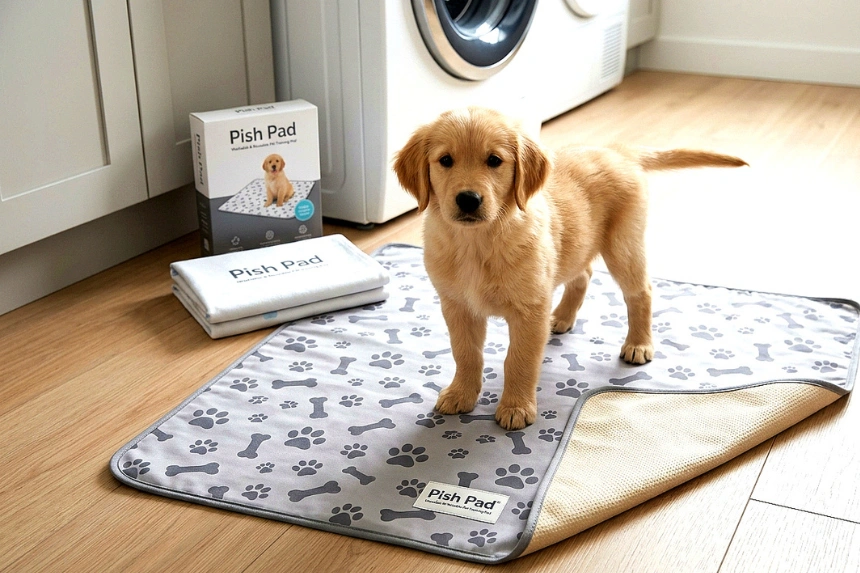
Pish Pads: Practical Indoor Toilet Solutions for Dogs
Introduction
Every dog owner knows the struggle of indoor accidents, the sudden dash across the carpet, the puddle behind the sofa, the frantic search for cleaning spray. If you have a new puppy, an older dog with incontinence, or a pet who spends long hours indoors, a reliable indoor toilet solution is not a luxury. It is a necessity. That is exactly where the pish pad comes in.
A pish pad is a reusable dog toilet training mat designed to control indoor urination. Unlike single-use disposable alternatives, pish pads are washable, multi-layer mats that absorb liquid, protect your floors, and can be cleaned and reused hundreds of times. They offer a practical, cost-effective, and environmentally responsible solution for households that need a dependable indoor toilet spot for their dog, whether during the early months of training or as a long-term management tool.
What Is a Pish Pad and How Does It Work?
A pish pad functions through a layered construction that combines absorbency with leak protection. Most reusable dog toilet training mats are built with three or four distinct layers:
Top layer: A soft fabric surface, often microfiber or bamboo blend, that wicks moisture downward and away from the dog’s paws.
Absorbent core: A middle layer designed to lock liquid in and prevent it from spreading or pooling.
Waterproof backing: A sealed bottom layer, typically TPU (thermoplastic polyurethane) or waterproof vinyl, that prevents urine from soaking through to the floor surface beneath.
Non-slip grip: Many pish pads incorporate a textured or rubberized underside to keep the mat stable on hard flooring.
This construction means the pad stays dry on top, protecting both the dog and the floor, while securely containing liquid until the mat is removed for washing. Most quality pish pads can be machine washed on a gentle cycle with mild detergent and air-dried, retaining their absorbency and structural integrity across 100 to 300 washes depending on materials and care.
Why Use a Pish Pad Instead of Disposable Pee Pads?
1. The Environmental Case
Disposable dog pee pads are a significant source of household waste. According to data reviewed by Pupcarely, disposable pads generate approximately 1.5 billion pounds of landfill waste per year, and their plastic-backed construction means they can take over 500 years to decompose. A single dog using disposable pads generates between 365 and 730 discarded pads annually.
A reusable pish pad replaces a minimum of 300 disposable pads over its lifespan, dramatically reducing the plastic and non-woven fabric waste associated with single-use alternatives. For households committed to reducing their environmental footprint, switching to a reusable toilet training mat is one of the more tangible changes available in everyday pet care.
2. The Financial Case
Disposable pads typically cost between £0.30 and £1.50 each depending on size and absorbency. For a household using one to two pads daily, that translates to £100-£600 or more per year, indefinitely. A quality pish pad requires a higher upfront investment but amortizes that cost across hundreds of uses. For many dog owners, the break-even point arrives within a few months of consistent use.
3. Performance Advantages
Reusable pish pads tend to be thicker and more absorbent than disposable alternatives, as they are engineered to withstand repeated washing without losing structural integrity. They are also less likely to bunch, curl at the edges, or tear, common failure modes with single-use pads, particularly with larger or more active dogs. The non-slip backing on most reusable mats also keeps them in place more reliably than the adhesive strips used on disposable versions.
Who Needs a Pish Pad?
1. Puppies in the Early Stages of Training
Puppies have limited bladder control. As a general rule, a puppy can hold its bladder for roughly one hour per month of age plus one additional hour—so a three-month-old puppy may only manage four hours at most. Combined with the frequency of urination events (puppies can need to go 12–14 times in a single day in the early weeks), a designated indoor toilet area is essential for managing accidents while training is established.
A pish pad placed in a consistent location gives the puppy a clear and reachable toilet spot. Experts recommend placing the mat in a low-traffic, easily accessible area — near a door is ideal, as it helps bridge the transition toward outdoor toileting over time.
2. Apartment and High-Rise Dog Owners
For dog owners without direct garden access, the logistics of outdoor toileting can be demanding. Lift journeys, communal staircases, and the time required to reach an outdoor area make frequent outdoor bathroom breaks impractical—especially overnight or during long working hours. A pish pad provides a reliable indoor option that keeps floors protected without requiring repeated trips outside.
In the UK, where cold winters, persistent rain, and high-density urban housing are common realities, indoor toilet management is a practical consideration for a large proportion of dog owners.
3. Senior and Incontinent Dogs
Older dogs often develop reduced bladder control as a natural part of aging. Dogs on diuretic medications, those recovering from surgery, or those with conditions such as diabetes or kidney disease may also require more frequent and urgent bathroom access than outdoor-only solutions can accommodate. A pish pad placed in a consistent location allows a senior dog to manage their needs with dignity and without stress, for both the dog and the owner.
3. Dogs Left Home During Working Hours
Even a well-trained adult dog can struggle to hold their bladder for eight or more hours. A pish pad in a designated area of the home provides a hygienic solution for households where extended periods without outdoor access are unavoidable.
How to Use a Pish Pad Effectively
1. Choosing the Right Size
Start with a larger pad than you think you need. A more generous surface area gives the dog a bigger target, reducing the likelihood of misses, particularly during the early stages of training when precision is not yet established. You can reduce the size of the mat gradually as the dog’s accuracy improves.
2. Positioning and Consistency
Place the pish pad in the same location consistently. Dogs build associations quickly through repetition, and moving the pad frequently can disrupt the training process. Near a door to the outside is a practical starting position, as it reinforces the spatial association between the indoor mat and the eventual outdoor goal.
Remove any other soft surfaces from the vicinity during training, rugs, doormats, and folded textiles can confuse a puppy who is learning that absorbent surfaces are the appropriate toilet target.
3. Introducing the Pad to Your Dog
Introduce the pad through guided access. When you observe the dog sniffing, circling, or showing restlessness, behaviours that signal an imminent need to go, calmly guide or carry them to the pad. Use a consistent verbal cue such as “go potty” or “toilet” each time. When the dog uses the pad correctly, reward immediately with praise or a treat to reinforce the association.
Most puppies begin to show consistent pad use within 7-14 days when training is structured and positive reinforcement is applied consistently.
4. Cleaning and Maintenance
Machine wash the pish pad on a gentle cycle with mild detergent. Avoid bleach and fabric softeners, as these can compromise the waterproof backing and reduce absorbency over time. Air drying rather than tumble drying extends the lifespan of the mat significantly. Having two or more pads in rotation ensures a clean pad is always available while another is being washed.
What Should You Look for in a Pish Pad?
1. Multi-Layer Construction
Look for products that explicitly describe their layering—a genuine absorbent core combined with a sealed waterproof backing is the minimum specification for effective floor protection. Single-layer or loosely constructed mats may absorb surface liquid but allow moisture to seep through under pressure.
2. Wash Durability Rating
Quality pish pads are rated for 100-300 machine washes. Products with reinforced stitching at the edges and high-grade waterproof backing materials will maintain their performance across repeated wash cycles. Cheaper alternatives may delaminate or lose absorbency capacity after relatively few washes.
3. Non-Slip Base
Particularly relevant for households with hard flooring, tiles, laminate, or hardwood, where a pad without grip can slide during use, creating both a mess hazard and a potential safety risk for the dog.
4. Size Options
Dogs of different breeds, sizes, and training stages have different spatial needs. Extra small formats (roughly 18″ x 24″) suit toy breeds; larger formats (36″ x 48″ and above) are more appropriate for medium and large dogs or for puppies where a generous target area accelerates training progress.
Conclusion
A pish pad is a straightforward but genuinely useful tool in any dog owner’s household management strategy. Whether you are navigating the early weeks of puppy toilet training, supporting a senior dog through incontinence challenges, or simply managing the realities of indoor living without consistent garden access, a reusable toilet training mat delivers reliable floor protection at a fraction of the long-term cost and environmental impact of disposable alternatives.
The key is selecting a well-constructed product with proper layering and wash durability and integrating it into a consistent training routine from the outset. With patience and positive reinforcement, most dogs adapt to a pish pad quickly, giving you greater peace of mind and your floors significantly better protection.